Published 13 May 2026 | Updated 2 June 2026
Technology
AI in Logistics App Development in 2026: Features, Cost & Complete Development Guide
Shipping a package from one city to another sounds simple. But behind that one delivery, there are hundreds of decisions happening every second — route planning, warehouse management, driver tracking, inventory updates, customs clearance, and more. This is exactly where AI in logistics is changing everything. In 2026, AI-powered logistics software is no longer a luxury for big corporations. It is becoming the standard for any logistics business that wants to stay competitive, reduce costs, and deliver faster. Whether you run a fleet of trucks, a warehouse, or a last-mile delivery startup, AI can transform how you operate.
Transform Your Digital Experience
AI Logistics App Development is the process of building intelligent logistics and supply chain applications that use Artificial Intelligence, Machine Learning, IoT, and data analytics to automate operations, optimize delivery routes, track shipments in real time, and improve overall supply chain efficiency. In 2026, it plays a critical role in helping logistics companies reduce costs, improve delivery speed, and make smarter, data-driven decisions across the entire supply chain.
- AI logistics apps use AI, ML, IoT, and analytics to automate and optimize supply chain operations.
- They improve route optimization, fleet management, warehouse operations, and delivery tracking.
- Real-time visibility helps businesses and customers track shipments accurately.
- Predictive analytics enables demand forecasting and proactive decision-making.
- AI reduces operational costs by optimizing fuel usage, routes, and resource allocation.
- Logistics companies gain faster deliveries and improved customer satisfaction.
- Key technologies include Python, TensorFlow, cloud platforms, IoT systems, and GPS APIs.
- Development costs typically range from $15,000 to $500,000+ depending on complexity.
- Project timelines vary from 6 weeks (MVP) to 12 months (enterprise systems).
- AI logistics solutions are essential for staying competitive in the modern supply chain industry.
What is AI Logistics App Development?
AI Logistics App Development refers to the process of creating intelligent logistics and supply chain management applications powered by Artificial Intelligence (AI), Machine Learning (ML), predictive analytics, and automation technologies. These applications help logistics companies optimize routes, automate fleet management, predict demand, monitor shipments in real time, reduce operational costs, and improve overall supply chain efficiency.
Unlike traditional logistics software, AI-powered logistics applications can analyze massive amounts of data, identify patterns, make predictions, and support automated decision-making. In 2026, businesses are increasingly adopting AI logistics solutions to streamline operations, improve delivery performance, and gain a competitive advantage in an increasingly digital supply chain environment.
Why AI Logistics App Development Matters in 2026
The logistics industry is experiencing rapid digital transformation. Growing customer expectations, rising transportation costs, and complex supply chains are pushing companies toward AI-powered solutions.
Increasing Demand for Real-Time Visibility
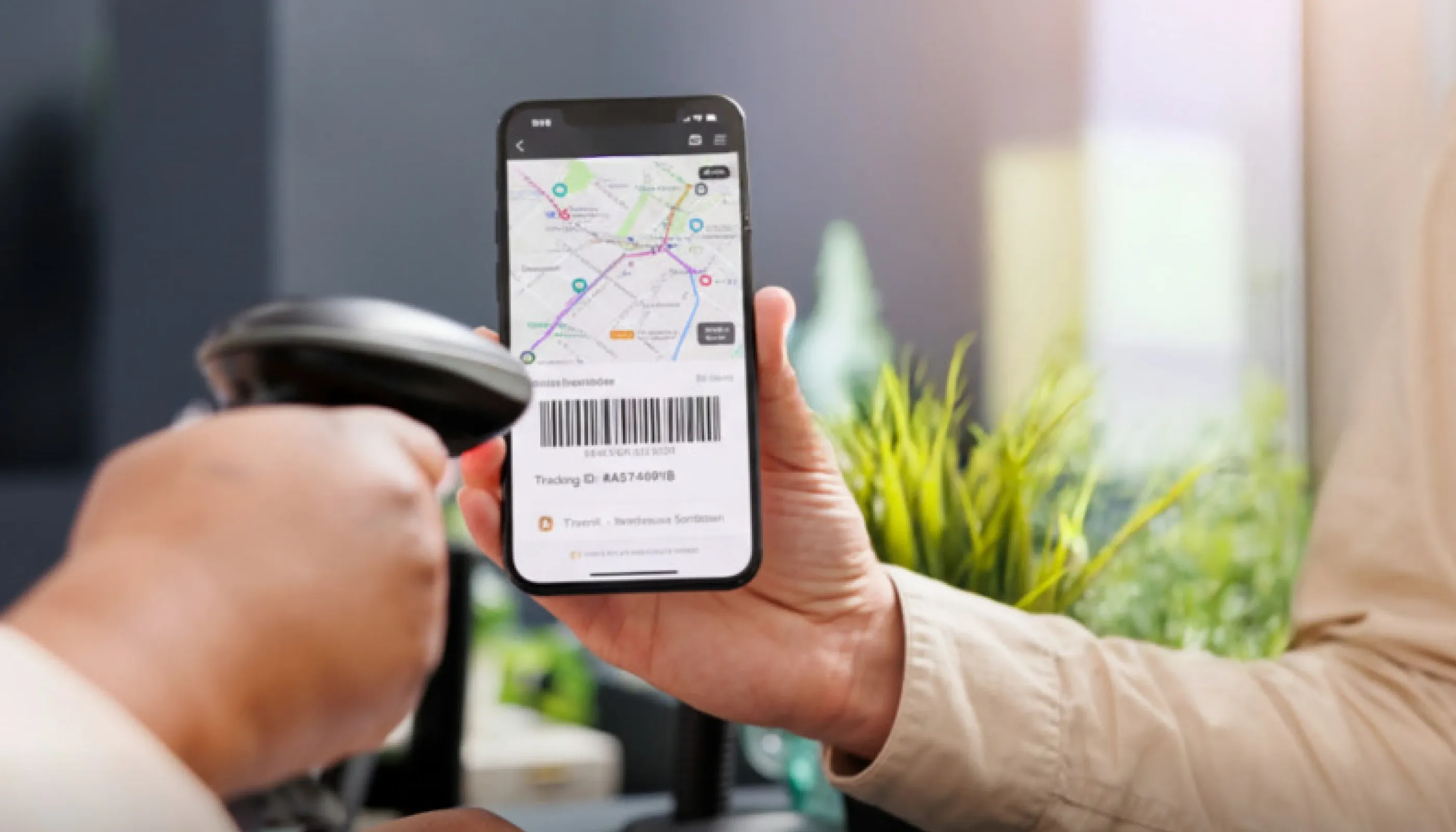
Customers and businesses expect complete transparency throughout the shipping process. AI-powered logistics apps provide real-time shipment tracking, delivery updates, and predictive arrival times.
Rising Transportation Costs
Fuel prices, labor expenses, and operational costs continue to increase. AI helps businesses optimize routes, reduce fuel consumption, and improve fleet utilization.
Supply Chain Complexity
Global supply chains involve multiple stakeholders, warehouses, transportation modes, and vendors. AI improves coordination and operational efficiency across the entire network.
Faster Decision-Making
AI systems analyze logistics data in real time, helping businesses make faster and more informed operational decisions.
Competitive Advantage
Companies leveraging AI logistics solutions can offer faster deliveries, better customer experiences, and lower operational costs than competitors relying on traditional systems.
How to Develop an AI Logistics App: Step-by-Step
Step 1: Define Business Objectives
Identify the primary goals of the application, such as:
- Route optimization
- Fleet management
- Warehouse automation
- Shipment tracking
- Demand forecasting
- Supply chain visibility
Clearly defined objectives help determine features and development priorities.
Step 2: Conduct Market Research
Analyze industry trends, competitor solutions, and customer pain points. Understanding market requirements helps create a product that addresses real business challenges.
Step 3: Design the Application Architecture
Plan system components including:
- Mobile application
- Web dashboard
- AI engine
- Cloud infrastructure
- Data analytics modules
- Third-party integrations
A scalable architecture ensures long-term growth and performance.
Step 4: Collect and Organize Logistics Data
AI systems rely on high-quality data such as:
- GPS tracking information
- Delivery history
- Fleet performance metrics
- Customer demand patterns
- Inventory records
Accurate data significantly improves AI performance.
Step 5: Develop AI and Machine Learning Models
Implement AI models for:
- Route optimization
- Predictive maintenance
- Demand forecasting
- Delivery prediction
- Risk assessment
- Dynamic scheduling
Step 6: Build Core Features
Essential logistics app features include:
- Real-time tracking
- Fleet monitoring
- Driver management
- Route planning
- Delivery scheduling
- Inventory management
- Automated notifications
Step 7: Integrate IoT and GPS Systems
IoT devices and GPS technology provide real-time operational data for monitoring vehicles, shipments, and warehouse assets.
Step 8: Test and Optimize
Conduct extensive testing for:
- AI accuracy
- App performance
- Security
- Scalability
- User experience
Continuous optimization improves reliability and efficiency.
Step 9: Launch and Monitor
Deploy the application and continuously monitor system performance, user engagement, and AI model effectiveness.
Tools & Technologies Used in AI Logistics App Development
| Category | Technologies |
|---|---|
| Programming Languages | Python, JavaScript, Java, Kotlin, Swift |
| AI & Machine Learning | TensorFlow, PyTorch, Scikit-Learn |
| Cloud Platforms | AWS, Microsoft Azure, Google Cloud |
| Databases | PostgreSQL, MongoDB, MySQL |
| GPS & Mapping | Google Maps API, Mapbox |
| IoT Integration | MQTT, Azure IoT Hub, AWS IoT Core |
| Analytics | Power BI, Tableau |
| Backend Frameworks | Node.js, Django, Spring Boot |
| Mobile Development | Flutter, React Native, Swift, Kotlin |
| DevOps | Docker, Kubernetes |
These technologies help build scalable, secure, and high-performance logistics applications.
Cost & Timeline for AI Logistics App Development
Estimated Development Cost
| Project Type | Estimated Cost |
|---|---|
| Basic Logistics Tracking App | $15,000 – $35,000 |
| Fleet Management Solution | $25,000 – $75,000 |
| AI Route Optimization Platform | $40,000 – $100,000 |
| Supply Chain Management System | $60,000 – $150,000 |
| Enterprise AI Logistics Platform | $150,000 – $500,000+ |
Estimated Development Timeline
| Development Scope | Timeline |
|---|---|
| MVP Development | 6–10 Weeks |
| Logistics Tracking App | 2–4 Months |
| Fleet Management Platform | 3–5 Months |
| AI-Powered Logistics Solution | 4–8 Months |
| Enterprise Supply Chain Platform | 6–12 Months |
Costs and timelines vary based on project complexity, integrations, AI features, and scalability requirements.
Real-World Examples of AI Logistics Applications
Smart Route Optimization
Delivery companies use AI to calculate optimal routes based on traffic conditions, weather, and delivery schedules.
Predictive Fleet Maintenance
AI analyzes vehicle performance data to predict maintenance needs before breakdowns occur.
Warehouse Automation
AI-powered systems optimize inventory placement, picking routes, and warehouse operations.
Demand Forecasting
Retailers and logistics providers use AI to predict customer demand and improve inventory planning.
Real-Time Shipment Tracking
AI logistics apps provide live shipment monitoring and estimated delivery times.
Last-Mile Delivery Optimization
Companies leverage AI to improve last-mile delivery efficiency and reduce transportation costs.
Supply Chain Risk Management
AI identifies potential disruptions and recommends proactive solutions to minimize business impact.
Benefits of AI in Logistics
Let's look at the major benefits of AI in logistics in simple terms:
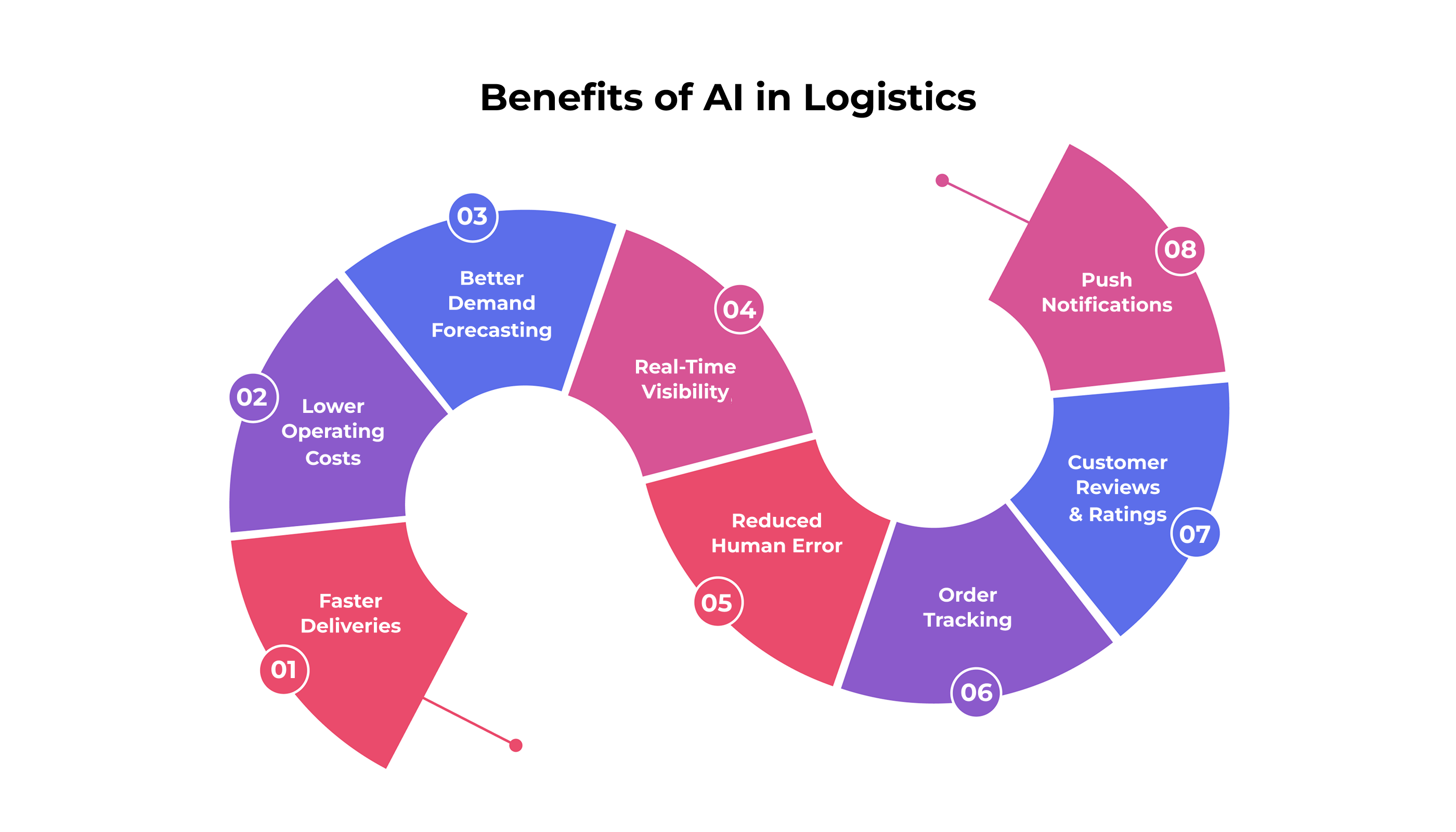
1. Faster Deliveries
AI analyzes traffic patterns, weather conditions, and road data in real time to find the fastest delivery route. This means packages arrive faster and customers are happier.
2. Lower Operating Costs
AI-powered logistics software reduces fuel consumption through smart routing, cuts warehouse labor costs through automation, and minimizes errors that cause expensive returns or re-deliveries.
3. Better Demand Forecasting
AI looks at historical data, seasonal trends, and market signals to predict how much inventory you will need and when. This prevents overstocking and stockouts.
4. Real-Time Visibility
With AI, businesses and customers can track shipments in real time at every step of the journey — from warehouse to doorstep.
5. Reduced Human Error
Manual processes lead to mistakes. AI automates repetitive tasks like data entry, invoice processing, and shipment documentation, reducing errors significantly.
6. Smarter Warehouse Management
AI controls robotic systems, manages storage locations, and optimizes picking routes inside warehouses to make operations faster and more accurate.
7. Proactive Problem Solving
Instead of reacting to problems after they happen, AI predicts them before they occur. If a shipment is likely to be delayed, the system alerts the team and suggests alternatives automatically.
8. Better Customer Experience
AI chatbots handle customer queries 24/7. Automated notifications keep customers informed. Personalized delivery options improve satisfaction.
Generative AI in Logistics — The Next Big Shift
Generative AI in logistics is one of the most exciting developments in 2026. Unlike traditional AI that analyzes existing data, Gen AI in logistics can create new content, scenarios, and solutions.
Here is how generative AI in logistics is being used:
- Automated Report Generation — Gen AI writes detailed shipment reports, performance summaries, and compliance documents automatically
- Supply Chain Risk Scenarios — Gen AI simulates hundreds of supply chain disruption scenarios and suggests the best mitigation strategies
- Smart Contract Generation — Gen AI drafts logistics contracts and agreements based on standard terms and specific requirements
- Chatbot & Virtual Assistant — Gen AI powers advanced customer service bots that understand complex queries and give accurate answers
- Training & Simulation — Gen AI creates realistic training simulations for warehouse staff and drivers
- Route Narrative Generation — Gen AI explains complex route changes to drivers in simple language via voice or text
Gen AI in logistics is still evolving, but companies that adopt it early will have a significant competitive advantage.
AI in Logistics Industry — Real Use Cases in 2026
Here are real examples of how AI in the logistics industry is being applied:
Amazon uses AI to predict what customers will order before they even place the order, pre-positioning inventory in nearby warehouses for faster delivery.
DHL uses AI-powered route optimization to reduce fuel costs by up to 15% and improve delivery accuracy.
FedEx uses machine learning to predict shipment delays and proactively notify customers with alternative solutions.
Maersk uses Gen AI to analyze thousands of shipping routes and suggest the most cost-effective options for cargo transport.
These are not just big company examples. In 2026, even small and mid-sized logistics companies are using AI-powered logistics software thanks to affordable custom logistics app development services.
Future of AI in Logistics
The future of AI in logistics is incredibly exciting. Here is what is coming in the next few years:
Autonomous Vehicles & Drones
Self-driving trucks and delivery drones are already being tested and deployed in several countries. AI is the brain behind these vehicles, making real-time decisions about navigation, obstacle avoidance, and delivery confirmation.
Digital Twins
AI will create virtual replicas of entire supply chains — called digital twins — allowing companies to simulate changes and test scenarios without any real-world risk.
Hyperautomation
The future of AI in logistics involves combining AI with robotics, IoT, and blockchain to create fully automated logistics operations with minimal human intervention.
Personalized Delivery Experiences
AI will allow customers to choose delivery windows, reroute packages in transit, and interact with smart delivery systems that adapt to their preferences.
Sustainable Logistics
AI will optimize routes and load planning to reduce carbon emissions, helping logistics companies meet environmental targets.
Why Choose PerfectionGeeks for Logistics App Development?
PerfectionGeeks is a trusted logistics app development company with expertise in building scalable, AI-powered logistics solutions for businesses worldwide. From fleet management and delivery tracking to custom logistics mobile app development, we deliver secure and high-performance applications tailored to your business needs. Our team combines deep logistics industry knowledge with advanced AI technologies to create smart, future-ready solutions. With transparent pricing, cross-platform development, agile processes, and 24/7 support, PerfectionGeeks helps businesses build reliable logistics platforms that improve efficiency, reduce costs, and support long-term growth.
Frequently Asked Questions
Quick answers related to this article from PerfectionGeeks.
1. What is the best use of AI in logistics?
2. How long does it take to develop a logistics app?
3. What is generative AI in logistics?
4. How much does custom logistics app development cost?
5. Can a small logistics company afford AI-powered software?
Conclusion
AI in logistics is transforming how businesses manage deliveries, fleets, warehouses, and supply chains. From route optimization and predictive analytics to generative AI-powered automation, smart logistics solutions help companies reduce costs, improve efficiency, and deliver better customer experiences. The cost of logistics app development depends on features, AI integration, and business requirements, but the long-term benefits make it a valuable investment. With expertise in AI-powered logistics software and custom app development, PerfectionGeeks helps businesses build scalable and future-ready logistics platforms for 2026 and beyond.

Written By Shrey Bhardwaj
Director & Founder
Shrey Bhardwaj is the Director & Founder of PerfectionGeeks Technologies, bringing extensive experience in software development and digital innovation. His expertise spans mobile app development, custom software solutions, UI/UX design, and emerging technologies such as Artificial Intelligence and Blockchain. Known for delivering scalable, secure, and high-performance digital products, Shrey helps startups and enterprises achieve sustainable growth. His strategic leadership and client-centric approach empower businesses to streamline operations, enhance user experience, and maximize long-term ROI through technology-driven solutions.
.webp)