Published 11 June 2026 | Updated 16 June 2026
Fintech Security Solutions
Enhancing AI Payment Gateway Security for Fintech Solutions
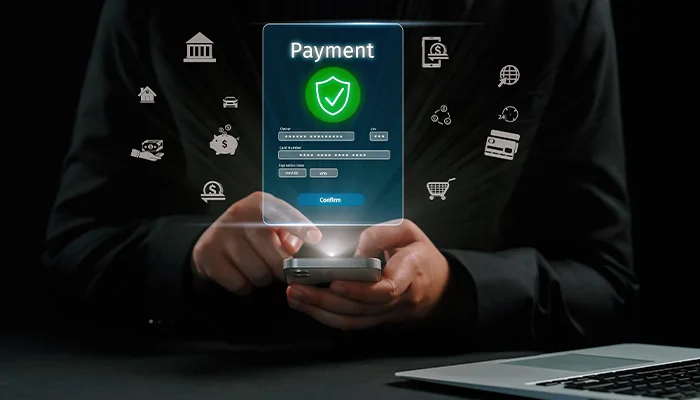
In today's digital landscape, the significance of AI payment gateway security cannot be overstated. Fintech companies and payment solution providers are at the forefront of financial innovation, making them prime targets for cyber threats. To safeguard sensitive data and ensure seamless transactions, leveraging advanced technologies such as AI-driven fraud detection and secure payment systems is essential. By understanding the intricacies of AI payment security, businesses can implement robust measures that not only protect their operations but also build trust with their customers.
Transform Your Digital Experience
AI payment gateway security utilizes advanced technologies to protect online transactions, employing methods like real-time monitoring and payment encryption to detect and prevent fraud effectively.
- AI payment gateway security is essential in safeguarding online transactions.
- Advanced AI fraud detection payments minimize risks associated with financial transactions.
- Implementing secure payment gateway systems can significantly reduce fraud incidents.
- Payment encryption AI plays a critical role in protecting sensitive data during transactions.
- Real-time transaction monitoring systems are vital for identifying suspicious activities.
- Fintech companies must prioritize robust fintech security solutions to build customer trust.
- Understanding the limitations and requirements of AI-based solutions is crucial.
- Industries including healthcare, finance, and eCommerce benefit greatly from enhanced security measures.
- Real-world use cases highlight the effectiveness of AI in fraud prevention.
- PerfectionGeeks offers tailored solutions for businesses looking to enhance their payment security.
What is AI Payment Gateway Security?
AI payment gateway security refers to the utilization of artificial intelligence technologies to enhance the safety and efficiency of online payment systems. This includes protecting sensitive customer information, preventing fraud, and ensuring compliance with regulatory standards. By employing sophisticated algorithms and data analytics, AI can identify anomalies and potential threats in real-time, providing a proactive defense against cyber attacks.
How AI Protects Payment Systems
AI enhances payment systems through various mechanisms, including:
- Real-time monitoring: Continuous analysis of transaction data to detect suspicious activities.
- Adaptive learning: Algorithms that evolve based on new data, improving their ability to identify fraud over time.
- Behavioral analytics: Establishing a baseline of normal transaction behavior to flag irregularities.
Fraud Detection in Real-Time Transactions
One of the primary benefits of AI payment gateway security is its ability to detect fraud in real-time. By analyzing transaction patterns and user behavior, AI systems can quickly identify potential threats and initiate preventive measures. For instance, if a transaction deviates from the user's typical spending habits, the system can trigger alerts or block the transaction until it is verified. This proactive approach significantly reduces the risk of fraudulent transactions.
Machine Learning in Payment Security
Machine learning (ML) plays a crucial role in enhancing payment security. ML algorithms can sift through vast amounts of transaction data to identify trends and anomalies that may indicate fraudulent activity. These systems not only provide immediate alerts but also improve over time through continuous training on new data sets, ensuring they remain effective against evolving threats.
Encryption and Tokenization
Securing sensitive data during transactions is paramount. AI payment gateway security integrates advanced encryption and tokenization techniques to protect financial information. Encryption transforms data into a secure format that can only be read by authorized parties, while tokenization replaces sensitive data elements with unique identifiers, reducing the risk of exposure. The table below illustrates the differences between encryption and tokenization:
| Feature | Encryption | Tokenization |
|---|---|---|
| Data Protection Method | Transforms data into unreadable format | Substitutes sensitive data with unique tokens |
| Data Sensitivity | Protects data in transit and at rest | Minimizes data exposure |
| Compliance | Supports regulatory requirements | Facilitates compliance by reducing sensitive data risk |
Challenges in Payment Security Systems
Despite the advantages of AI in payment security, fintech companies face several challenges:
- Integration complexities: Merging AI systems with existing infrastructure can be technically challenging.
- Data quality: Inaccurate or incomplete data can lead to erroneous fraud detection outcomes.
- Regulatory compliance: Adhering to ever-evolving regulations can complicate the implementation of AI-driven solutions.
Benefits for Fintech Companies
Implementing AI payment gateway security offers numerous benefits, including:
- Reduced fraud rates: Enhanced detection capabilities lead to lower instances of fraud.
- Improved customer trust: Secure transactions foster customer confidence in fintech services.
- Operational efficiency: Automation of fraud detection processes reduces the need for manual interventions, saving time and resources.
Future of Secure Digital Payments
The future of secure digital payments lies in the continued evolution of AI technologies. As cyber threats become more sophisticated, fintech companies must stay ahead by adopting innovative security measures. The integration of blockchain technology with AI, for example, holds promise for creating even more secure payment systems. Furthermore, as consumer expectations shift towards seamless and secure transactions, the demand for advanced payment security solutions will only intensify.
Decision Guide
When considering the implementation of AI payment gateway security, fintech companies should evaluate their specific needs and challenges. Choose:
- AI-driven solutions if you require real-time fraud detection and enhanced transaction security.
- Encryption and tokenization if protecting sensitive data during transactions is a priority.
- Integrated systems if you seek to streamline operations without compromising security.
Frequently Asked Questions
Quick answers related to this article from PerfectionGeeks.
1. How does AI enhance payment gateway security?
2. What role does fraud detection play in secure payments?
3. What are the benefits of using AI for transaction monitoring?
4. What challenges do fintech companies face in AI payment security?
5. How does payment encryption AI protect sensitive data?
Conclusion
As the digital payment landscape grows, the need for effective AI payment gateway security becomes increasingly critical. Companies must implement advanced AI fraud detection models that analyze transaction patterns and identify anomalies in real-time. Additionally, adopting secure payment gateway systems ensures that customer data remains protected throughout the payment process.
To make informed decisions regarding payment security, consider the following:
- Choose AI-driven solutions if you require proactive fraud detection capabilities.
- Opt for payment encryption systems for enhanced data protection during transactions.
- Implement transaction monitoring systems for real-time visibility into payment activities.
For fintech companies and payment solution providers looking to elevate their security measures, PerfectionGeeks offers comprehensive solutions tailored to your needs. Contact us today to explore how we can help you enhance your payment gateway security.

Written By Shrey Bhardwaj
Director & Founder
Shrey Bhardwaj is the Director & Founder of PerfectionGeeks Technologies, bringing extensive experience in software development and digital innovation. His expertise spans mobile app development, custom software solutions, UI/UX design, and emerging technologies such as Artificial Intelligence and Blockchain. Known for delivering scalable, secure, and high-performance digital products, Shrey helps startups and enterprises achieve sustainable growth. His strategic leadership and client-centric approach empower businesses to streamline operations, enhance user experience, and maximize long-term ROI through technology-driven solutions.