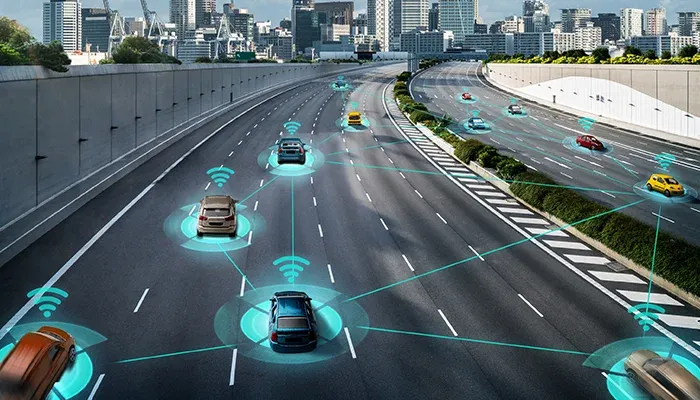
Published 2 April 2026 | Updated 2 April 2026
Technology
How AI is Powering Self-Driving Cars and Smarter Mobility Solutions
Artificial Intelligence (AI) is changing the way we travel. From smart traffic systems to fully autonomous cars, AI is making transportation faster, safer, and more efficient. Today, AI in self-driving cars is one of the biggest innovations in the automotive world. These vehicles can drive themselves, make decisions, and avoid accidents using advanced technologies. In this blog, we will understand how autonomous vehicles AI works, how it improves mobility, and what the future holds for AI-powered mobility solutions.
What Are Self-Driving Cars and How Do They Work?
Self-driving cars, also known as autonomous vehicles, are vehicles that can drive without human input. They use a combination of sensors, cameras, software, and artificial intelligence in cars to understand their surroundings and make decisions.
These cars follow a simple process:
- Sense – Collect data from the environment
- Think – Process the data using AI
- Act – Take actions like braking, steering, or accelerating
This is how self-driving car technology works in real-time. The car continuously collects data, analyzes it, and reacts instantly.
How AI is Used in Self-Driving Cars
Artificial Intelligence is the backbone of self-driving car technology. It allows vehicles to operate without human drivers by processing data, making decisions, and ensuring safety in real time. Here are the main points explained simply:
1. Perception of the Environment
AI collects and processes data from sensors like cameras, LiDAR, and radar. This helps the car build a complete picture of its surroundings, including pedestrians, vehicles, lane markings, and traffic signals.
2. Real-Time Decision Making
AI systems decide when to accelerate, brake, or change lanes. By analyzing traffic conditions instantly, they ensure smooth and safe driving without human input.
3. Predictive Analytics
AI predicts the behavior of other vehicles and pedestrians. It anticipates risks such as sudden stops or lane changes, allowing the car to prepare and avoid accidents.
4. Smart Navigation and Route Planning
AI-powered mobility solutions optimize routes by analyzing live traffic data. This helps cars avoid congestion, reduce travel time, and save fuel, making journeys more efficient.
5. Collision Avoidance Systems
AI automatically applies brakes, adjusts speed, or steers away from obstacles. These systems react faster than human drivers, reducing the chances of accidents.
6. Continuous Learning
Through machine learning, AI improves over time. The more data it processes, the smarter and more reliable the car becomes. This ensures autonomous vehicles AI systems
How Machine Learning Helps Autonomous Vehicles Make Decisions
Machine learning is a core part of AI in self-driving cars because it allows vehicles to learn from data and improve their performance over time. Instead of relying only on fixed rules, machine learning helps cars recognize patterns in traffic, road conditions, and driver behavior. By processing huge amounts of driving data, the system can predict what might happen next and make smarter decisions in real time. This means autonomous vehicles can adapt to new situations, avoid risks, and continuously get better at driving safely and efficiently.
How Computer Vision Helps Cars See and Understand the Road
Computer vision is one of the most important technologies in artificial intelligence in self-driving cars. It gives autonomous vehicles the ability to “see” and interpret their surroundings, much like human eyes do. By using cameras and advanced AI algorithms, computer vision processes visual data in real time to help cars understand the road and make safe driving decisions.
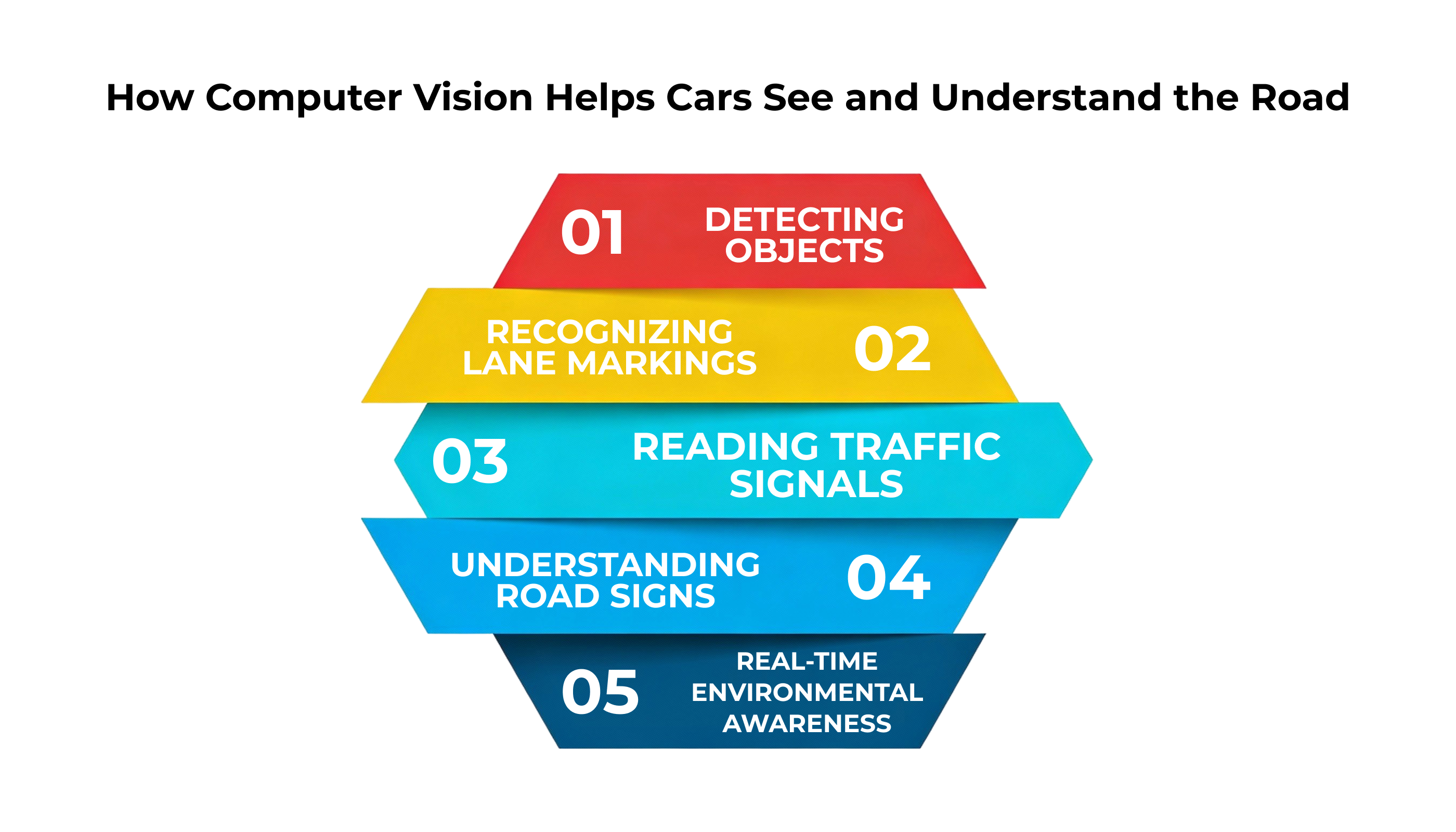
Here are the main points explained:
1. Detecting Objects
Computer vision allows cars to identify pedestrians, cyclists, vehicles, and obstacles. This helps the vehicle avoid collisions and ensures smoother navigation in busy environments.
2. Recognizing Lane Markings
Self-driving cars use computer vision to detect lane boundaries and road markings. This ensures the car stays in the correct lane, performs safe lane changes, and maintains proper road discipline.
3. Reading Traffic Signals
AI-powered computer vision systems can recognize traffic lights and interpret their status (red, yellow, or green). This helps cars follow traffic rules and respond correctly to signals.
4. Understanding Road Signs
Computer vision enables cars to read and interpret road signs such as speed limits, stop signs, and warnings. This ensures compliance with road regulations and improves safety.
5. Real-Time Environmental Awareness
By continuously analyzing visual inputs, computer vision provides a dynamic understanding of the environment. This allows cars to adapt to curves, intersections, and unexpected changes on the road.
What Sensors Are Used in Self-Driving Cars and Why They Matter
Self-driving cars use different types of sensors to understand their surroundings. These sensors work together to provide accurate information.
Types of Sensors and Their Functions
| Sensor Type | Function | Importance |
| Cameras | Capture images of surroundings | Helps in object detection |
| LiDAR | Uses laser to map environment | Creates 3D view of surroundings |
| Radar | Detects speed and distance of objects | Works well in bad weather |
| Ultrasonic Sensors | Detect nearby objects | Useful for parking |
These sensors are the foundation of self-driving car technology. They collect data that AI uses to make decisions.
How AI Helps in Smart Navigation and Route Planning
AI plays a major role in making navigation smarter and more efficient in self-driving car technology. Instead of relying only on static maps, AI systems analyze real-time data from sensors, GPS, and traffic networks to plan the best possible routes. This makes travel faster, safer, and more convenient.
Here are the main points explained:
1. Real-Time Traffic Analysis
AI processes live traffic data to detect congestion, accidents, or road closures. By understanding current conditions, it helps cars avoid delays and choose smoother routes.
2. Route Optimization
AI-powered navigation systems calculate the shortest and most efficient path. They consider distance, traffic flow, and road conditions to reduce travel time and fuel consumption.
3. Predicting Delays
AI can forecast potential delays by analyzing traffic patterns and historical data. This allows autonomous vehicles to adjust routes before problems occur.
4. Alternate Path Suggestions
If the main route becomes blocked or crowded, AI instantly suggests alternate paths. This flexibility ensures continuous movement without unnecessary stops.
5. Integration with Smart Mobility Systems
AI connects cars with smart city infrastructure, such as traffic signals and public transport systems. This AI in smart mobility approach improves coordination and makes urban travel more efficient.
How AI Improves Safety in Self-Driving Cars
Safety is one of the biggest benefits of autonomous vehicles AI. Human error is the main cause of accidents, and AI helps reduce this risk.
Here’s how AI improves safety:
- Detects dangers faster than humans
- Maintains safe distance from other vehicles
- Alerts about possible collisions
- Automatically applies brakes when needed
With artificial intelligence in self driving cars, vehicles can react in milliseconds, which is much faster than humans.
What Are the Challenges in Self-Driving Car Technology
Even though autonomous vehicles technology is advanced, there are still some challenges:
1. High Cost: Self-driving systems are expensive to develop and maintain.
2. Complex Road Conditions: Unpredictable situations like bad weather or poor roads can affect performance.
3. Legal and Regulatory Issues: Different countries have different rules for autonomous vehicles.
4. Data Privacy Concerns: These vehicles collect a lot of data, raising privacy concerns.
5. Technology Limitations: AI systems are still learning and are not perfect yet.
These challenges show that while ai in self-driving cars is powerful, it still needs improvement.
What is the Future of AI in Smarter Mobility Solutions
The future of AI-powered mobility solutions looks very promising. As technology continues to advance, AI will make transportation safer, faster, and more efficient. In the coming years, we can expect fully autonomous vehicles that require no human input, smarter algorithms that make quicker and more accurate decisions, and deeper integration with smart cities where cars communicate with traffic signals and infrastructure. AI will also support eco-friendly travel by optimizing energy use in electric vehicles and reducing congestion through intelligent traffic management. In simple words, the future of AI in smart mobility is about creating connected, sustainable, and reliable transportation systems that improve everyday travel for everyone.
Frequently Asked Questions
Quick answers related to this article from PerfectionGeeks.
1. How does machine learning improve autonomous vehicles?
2. What are the main challenges in self-driving car technology?
3. How does AI contribute to smart mobility in cities?
4. How can PerfectionGeeks help businesses with AI-powered solutions?
Conclusion
AI is transforming the way we travel. From improving safety to optimizing routes, ai in self-driving cars is making transportation smarter and more efficient. With the help of autonomous vehicles AI, cars can now think, learn, and make decisions. Although there are challenges, the future of self-driving car technology is bright. As technology continues to grow, we will see more advanced AI-powered mobility solutions that will completely change our daily lives.

Written By Shrey Bhardwaj
Director & Founder
Shrey Bhardwaj is the Director & Founder of PerfectionGeeks Technologies, bringing extensive experience in software development and digital innovation. His expertise spans mobile app development, custom software solutions, UI/UX design, and emerging technologies such as Artificial Intelligence and Blockchain. Known for delivering scalable, secure, and high-performance digital products, Shrey helps startups and enterprises achieve sustainable growth. His strategic leadership and client-centric approach empower businesses to streamline operations, enhance user experience, and maximize long-term ROI through technology-driven solutions.