Published 9 July 2025 | Updated 6 July 2026
App Development
How to Monetize Your Health & Fitness App: Proven Strategies for Steady Revenue
The healthcare and wellness industry is rapidly evolving through digital transformation. From telemedicine platforms and fitness trackers to mental health apps and chronic disease management solutions, mobile healthcare applications are becoming essential tools for modern users.
However, building a successful healthcare or fitness application is only part of the journey. Businesses also need a sustainable and scalable monetization strategy to generate long-term revenue while maintaining user trust and compliance.
In 2026, medical app monetization strategies are becoming more advanced with AI-driven personalization, subscription-based healthcare services, virtual consultations, wearable integrations, and premium digital wellness experiences.
This guide explains the best monetization models for healthcare and fitness apps, revenue strategies, industry trends, pricing models, and how businesses can maximize profitability in the growing digital health market.
What is a medical app monetization strategy?A medical app monetization strategy is a revenue-generation model used by healthcare, wellness, and fitness applications to earn income through subscriptions, ads, in-app purchases, consultations, premium content, or enterprise partnerships. What are the best ways to monetize a healthcare app?Popular healthcare app monetization methods include:
Which monetization model works best for fitness apps?Subscription-based and freemium models are the most effective for fitness and wellness apps because they encourage recurring revenue and long-term user engagement. Why is app monetization important in healthcare?A strong monetization strategy helps businesses:
|
- Healthcare and fitness app monetization is becoming a major growth driver in the digital health industry in 2026.
- Subscription-based and freemium models remain the most effective monetization strategies for healthcare and wellness applications.
- AI-powered personalization, predictive analytics, and virtual health assistants are transforming medical app revenue generation.
- Telemedicine platforms generate recurring revenue through virtual consultations, premium healthcare services, and subscription plans.
- Wearable device integrations significantly improve user engagement and long-term customer retention.
- Healthcare apps must prioritize HIPAA, GDPR, and healthcare data compliance to maintain user trust and platform security.
- Personalized wellness experiences and premium health analytics help increase app conversions and subscription upgrades.
- Corporate wellness partnerships are creating new enterprise revenue opportunities for healthcare app providers.
- Businesses investing in scalable healthcare app development gain competitive advantages through improved user experience and recurring revenue models.
- The future of healthcare app monetization lies in AI-driven, secure, personalized, and value-focused digital health ecosystems.
Why Medical and Fitness App Monetization Matters in 2026
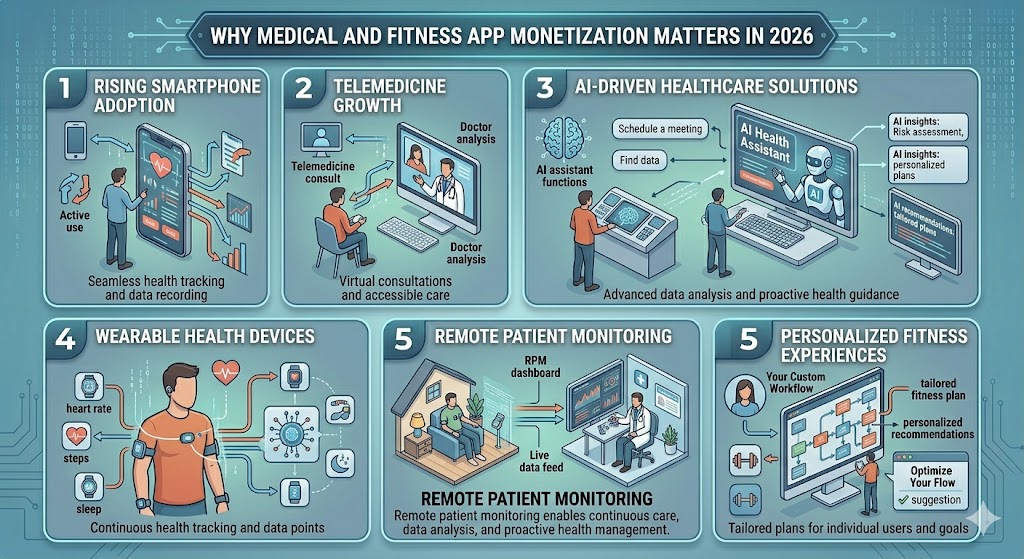
The digital healthcare market continues expanding rapidly due to:
- Rising smartphone adoption
- Telemedicine growth
- AI-driven healthcare solutions
- Wearable health devices
- Personalized fitness experiences
- Remote patient monitoring
Healthcare businesses now compete in a highly digital environment where monetization directly impacts scalability and long-term profitability.
Without a proper monetization strategy, even high-quality healthcare applications may struggle to sustain operations and innovation.
Industry Statistics on Healthcare App Revenue Growth
- The global digital health market is expected to exceed $600 billion by 2030.
- More than 60% of healthcare organizations are investing in mobile healthcare technologies.
- Subscription-based wellness apps continue showing strong annual revenue growth.
- Fitness and telemedicine applications remain among the fastest-growing mobile app categories globally.
- AI-powered health applications are expected to dominate healthcare innovation in 2026 and beyond.
These trends highlight the increasing demand for scalable healthcare app business models and monetization strategies.
Top Medical App Monetization Models
1. Subscription-Based Model
The subscription model is one of the most profitable healthcare app monetization strategies.
Users pay:
- Monthly fees
- Quarterly plans
- Annual memberships
To access premium healthcare services and advanced features.
Common Subscription Features:
- Personalized fitness plans
- Virtual consultations
- AI-powered health tracking
- Advanced analytics
- Premium wellness content
Best For:
- Fitness apps
- Telemedicine platforms
- Mental health apps
- Chronic care management systems
2. Freemium Model
The freemium strategy offers basic features for free while charging users for advanced functionalities.
Free Features:
- Basic workout tracking
- Limited consultations
- Health reminders
Premium Features:
- Personalized coaching
- AI recommendations
- Advanced health reports
- Video consultations
This model helps attract large user bases quickly.
How AI Is Transforming Medical App Monetization
Artificial intelligence is reshaping healthcare app monetization strategies in 2026 by enabling more personalized and data-driven user experiences.
AI-Powered Monetization Features
Personalized Health Recommendations
AI analyzes user behavior and health data to recommend premium services and subscription upgrades.
Predictive Wellness Analytics
Healthcare apps use AI to deliver predictive health insights and advanced analytics as premium features.
Virtual Health Assistants
AI chatbots and virtual assistants improve engagement while reducing operational costs.
Smart Fitness Coaching
Fitness apps provide AI-generated workout and nutrition plans through subscription tiers.
Automated Patient Support
AI-powered automation improves telemedicine workflows and customer service efficiency.
AI integration not only enhances user engagement but also increases recurring revenue opportunities for healthcare businesses.
3. In-App Purchases
Healthcare and fitness apps often monetize through one-time purchases.
Examples:
- Diet plans
- Workout programs
- Meditation sessions
- Health reports
- Specialized consultations
4. Telemedicine Consultation Fees
Telehealth applications generate revenue by charging consultation fees between patients and healthcare providers.
Revenue Sources:
- Video appointments
- Specialist consultations
- Prescription services
- Follow-up sessions
Telemedicine continues growing rapidly due to convenience and accessibility.
5. Advertising and Sponsored Content
Some free healthcare apps generate revenue through:
- Display advertisements
- Sponsored wellness content
- Brand partnerships
However, healthcare apps must ensure advertising remains compliant and non-intrusive.
6. Corporate Wellness Partnerships
Businesses increasingly partner with healthcare app providers to support employee wellness programs.
Enterprise Revenue Opportunities:
- Corporate fitness plans
- Employee mental health platforms
- Wellness analytics dashboards
Build Profitable Healthcare Apps with PerfectionGeeksLaunch secure, scalable, and revenue-driven healthcare applications with advanced monetization features and AI-powered experiences. Why Choose PerfectionGeeks?
Explore innovative healthcare technology services with PerfectionGeeks and transform your healthcare business. |
Key Features That Improve Healthcare App Revenue
Personalized User Experience
Customized recommendations improve user retention and subscription conversions.
Wearable Device Integration
Integration with smartwatches and fitness trackers increases engagement.
AI-Powered Analytics
Advanced insights encourage premium feature adoption.
Secure Payment Systems
Reliable payment gateways improve customer trust and transaction success rates.
Multi-Platform Accessibility
Cross-platform apps increase market reach and revenue potential.
Challenges in Medical App Monetization
Healthcare Compliance Regulations
Apps must comply with:
- HIPAA
- GDPR
- Healthcare data privacy laws
User Trust and Security
Healthcare applications must protect sensitive patient information.
Market Competition
The healthcare app market is becoming increasingly competitive.
User Retention
Long-term engagement is essential for subscription-based revenue models.
Best Practices for Healthcare App Monetization
Focus on User Value
Users are more likely to pay for apps delivering measurable health improvements.
Avoid Aggressive Advertising
Excessive ads can reduce trust and user retention.
Use Tiered Subscription Models
Offer flexible pricing plans based on user needs.
Invest in AI and Personalization
AI improves engagement, retention, and monetization opportunities.
Prioritize Security and Compliance
Trust remains critical in digital healthcare ecosystems.
Future Trends in Healthcare App Monetization 2026
AI-Driven Personalized Healthcare
AI will increasingly power personalized wellness recommendations and automated care systems.
Wearable Ecosystem Expansion
Fitness trackers and smart health devices will continue driving app engagement.
Subscription-Based Telemedicine
Recurring virtual healthcare services will become mainstream.
Blockchain in Healthcare Payments
Blockchain may improve payment transparency and healthcare security.
Virtual Wellness Communities
Community-based wellness platforms are expected to increase user retention.
|
Frequently Asked Questions
Quick answers related to this article from PerfectionGeeks.
1. What is the best monetization strategy for medical apps?
2. How do fitness apps generate revenue?
3. Are healthcare apps profitable in 2026?
4. Why is AI important in healthcare app monetization?
5. What compliance standards should healthcare apps follow?
6. Can telemedicine apps use subscription models?
Conclusion
Healthcare and fitness applications are transforming how people manage wellness, access medical services, and improve overall health outcomes. However, long-term success depends heavily on implementing the right monetization strategy.
From subscriptions and freemium models to AI-powered analytics and telemedicine services, businesses now have multiple opportunities to generate sustainable revenue while improving patient engagement.
As the digital health industry continues evolving in 2026, healthcare businesses that prioritize personalization, security, scalability, and user value will gain significant competitive advantages in the growing healthcare technology ecosystem.

Written By Shrey Bhardwaj
Director & Founder
Shrey Bhardwaj is the Director & Founder of PerfectionGeeks Technologies, bringing extensive experience in software development and digital innovation. His expertise spans mobile app development, custom software solutions, UI/UX design, and emerging technologies such as Artificial Intelligence and Blockchain. Known for delivering scalable, secure, and high-performance digital products, Shrey helps startups and enterprises achieve sustainable growth. His strategic leadership and client-centric approach empower businesses to streamline operations, enhance user experience, and maximize long-term ROI through technology-driven solutions.