
Published 22 December 2025 | Updated 23 May 2026
Technology
How to Build a Custom Restaurant Management Software: Features, Process & Cost Breakdown
Running a restaurant involves many daily operations such as managing orders, tables, billing, inventory, and staff. Handling everything manually can lead to mistakes, delays, and poor customer experience. This is where restaurant management software plays an important role. A custom solution helps restaurant owners manage operations smoothly and grow their business efficiently. In this blog, we will explain how to build a custom restaurant management system, its key features, development process, and the cost to develop restaurant management software.
What is restaurant management software?Restaurant management software is a digital solution that helps restaurants automate operations including billing, inventory management, table reservations, online ordering, staff management, customer engagement, and analytics. Why do restaurants need management software?Restaurants use management software to:
What is the cost of restaurant management software development?The average restaurant software development cost ranges between:
Pricing depends on features, integrations, scalability, and cloud infrastructure. Which technologies are used in restaurant software development?Popular technologies include:
|
- Restaurant management software automates billing, ordering, inventory, staff management, and customer engagement.
- Cloud-based restaurant platforms are becoming the preferred choice for scalability and flexibility.
- AI-powered analytics improve customer personalization and operational efficiency.
- Online food ordering and contactless payments are driving restaurant digital transformation.
- POS systems remain the foundation of modern restaurant technology ecosystems.
- Restaurant software development costs vary based on features, integrations, and scalability requirements.
- Mobile-friendly and cloud-native solutions improve customer experiences and business operations.
- Restaurants investing in digital transformation gain long-term competitive advantages.
Why Restaurant Management Software Is Growing Rapidly in 2026
Consumer expectations are evolving rapidly in the digital food service industry. Customers now expect:
- Fast online ordering
- Contactless payments
- Real-time order tracking
- Personalized experiences
- Loyalty rewards
- Seamless delivery services
At the same time, restaurant owners must manage:
- Labor shortages
- Rising operational costs
- Inventory optimization
- Multi-location operations
- Customer retention
Restaurant management software helps businesses solve these challenges while improving operational scalability.
Industry Statistics on Restaurant Technology
- The global restaurant management software market is expected to exceed $15 billion by 2030.
- Online food delivery continues experiencing strong year-over-year growth worldwide.
- More than 70% of restaurants now use cloud-based POS systems.
- AI-driven restaurant analytics adoption is increasing rapidly across hospitality businesses.
- Mobile ordering and contactless payment solutions are becoming standard customer expectations.
These trends highlight why restaurant software development services are becoming essential for modern food businesses.
Core Features of Restaurant Management Software
Point of Sale (POS) System
A POS system is the backbone of restaurant operations.
Features Include:
- Billing automation
- Order management
- Payment processing
- Multi-terminal support
- Sales reporting
Cloud-based POS systems improve operational speed and efficiency.
Online Ordering System
Restaurants increasingly rely on digital ordering platforms.
Benefits:
- Increased customer convenience
- Higher order volumes
- Better customer engagement
- Reduced dependency on third-party platforms
Online ordering systems can support:
- Mobile apps
- Websites
- QR code ordering
- Self-service kiosks
Table Reservation Management
Restaurants use reservation systems to optimize seating capacity and customer flow.
Features Include:
- Online booking
- Waitlist management
- Table allocation
- Customer notifications
Inventory Management
Inventory management software helps restaurants track:
- Stock levels
- Ingredient usage
- Supplier orders
- Waste management
This reduces operational losses and improves profitability.
Employee Management
Restaurant management platforms help monitor:
- Staff attendance
- Payroll
- Shift scheduling
- Employee performance
CRM and Loyalty Programs
Customer relationship management features improve retention through:
- Personalized offers
- Loyalty rewards
- Customer analytics
- Automated marketing campaigns
Kitchen Display System (KDS)
KDS improves kitchen operations by digitizing order processing and workflow management.
Benefits of Restaurant Management Software
Improved Operational Efficiency
Automation reduces manual tasks and streamlines restaurant workflows.
Better Customer Experience
Restaurants can deliver:
- Faster service
- Personalized engagement
- Seamless ordering experiences
Increased Revenue Opportunities
Digital ordering systems and loyalty programs improve customer retention and sales.
Reduced Operational Costs
Inventory tracking and automation minimize waste and labor inefficiencies.
Real-Time Business Analytics
Restaurant owners gain actionable insights through real-time reporting dashboards.
Types of Restaurant Software Solutions
Cloud-Based Restaurant Software
Cloud platforms offer:
- Remote access
- Scalability
- Automatic updates
- Lower infrastructure costs
Cloud-native systems are becoming the preferred choice in 2026.
On-Premise Restaurant Systems
On-premise systems provide:
- Greater infrastructure control
- Local data hosting
However, they require higher maintenance and hardware investments.
Mobile Restaurant Applications
Restaurants increasingly use mobile apps for:
- Food ordering
- Customer engagement
- Delivery tracking
- Loyalty management
Build Smart Restaurant Management Software with PerfectionGeeksTransform your restaurant operations with scalable, AI-powered, and cloud-native restaurant management software solutions. Why Choose PerfectionGeeks?
Explore innovative restaurant technology solutions with PerfectionGeeks and accelerate your restaurant’s digital transformation. |
Restaurant Management Software Development Process
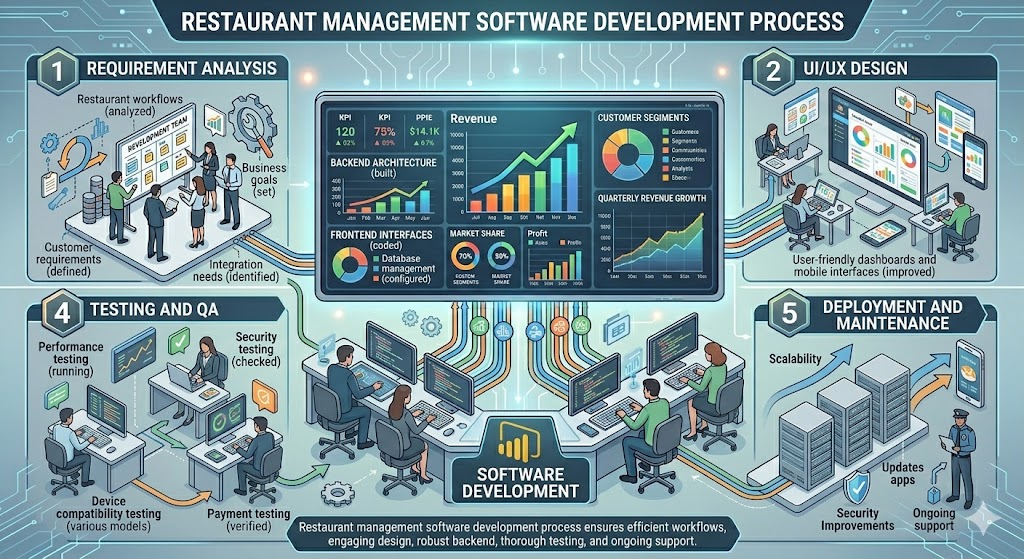
Requirement Analysis
Developers analyze:
- Restaurant workflows
- Customer requirements
- Business goals
- Integration needs
UI/UX Design
User-friendly dashboards and mobile interfaces improve usability and customer engagement.
Software Development
Development includes:
- Backend architecture
- Frontend interfaces
- API integrations
- Database management
Testing and QA
Teams perform:
- Performance testing
- Security testing
- Device compatibility testing
- Payment testing
Deployment and Maintenance
Ongoing support ensures scalability, updates, and security improvements.
Technologies Used in Restaurant Software Development
Artificial Intelligence
AI helps restaurants:
- Forecast demand
- Analyze customer behavior
- Automate recommendations
- Optimize inventory
Cloud Computing
Cloud infrastructure improves scalability and operational flexibility.
Internet of Things (IoT)
IoT devices support:
- Smart kitchen monitoring
- Inventory automation
- Equipment maintenance tracking
Data Analytics
Analytics dashboards provide insights into:
- Sales performance
- Customer trends
- Staff productivity
- Inventory management
Contactless Payment Integration
Restaurants integrate:
- Mobile wallets
- QR payments
- NFC technologies
To improve customer convenience.
Restaurant Software Development Cost in 2026
| Software Type | Estimated Cost |
|---|---|
| Basic POS Software | $10,000 – $30,000 |
| Mid-Level Restaurant Platform | $40,000 – $80,000 |
| Enterprise Restaurant Ecosystem | $100,000 – $300,000+ |
| AI-Powered Restaurant Platform | $150,000 – $500,000+ |
Challenges in Restaurant Software Development
Integration Complexity
Restaurants often require integration with:
- Payment gateways
- Delivery platforms
- CRM systems
- Accounting software
Data Security
Customer payment and operational data require strong cybersecurity protection.
Scalability Requirements
Growing restaurants need software capable of handling increased traffic and multi-location operations.
Real-Time Performance
Restaurant systems must process orders and payments with minimal latency.
Emerging Trends in Restaurant Technology 2026
AI-Powered Restaurant Automation
AI is improving:
- Demand forecasting
- Menu recommendations
- Customer personalization
Voice Ordering Systems
Voice-enabled ordering is becoming increasingly popular.
Smart Kitchen Technologies
IoT-enabled kitchens improve efficiency and food preparation workflows.
Delivery Platform Integration
Restaurants increasingly integrate directly with food delivery ecosystems.
Data-Driven Customer Engagement
Restaurants use analytics for personalized marketing and customer retention strategies.
Best Practices for Restaurant Software Development
Focus on Scalability
Build systems capable of supporting future business growth.
Prioritize User Experience
Simple interfaces improve customer and employee adoption.
Ensure Security Compliance
Protect payment data and customer information using advanced security protocols.
Use Cloud-Native Architecture
Cloud infrastructure improves flexibility and reduces operational costs.
Optimize Mobile Accessibility
Mobile-friendly experiences are essential for modern restaurant operations.
|
Frequently Asked Questions
Quick answers related to this article from PerfectionGeeks.
1. What is restaurant management software?
2. How much does restaurant software development cost?
3. Why do restaurants need POS systems?
4. What technologies are used in restaurant software?
5. Is cloud-based restaurant software better?
6. Can restaurant software integrate with delivery platforms?
Conclusion
Restaurant management software has become essential for businesses seeking operational efficiency, customer satisfaction, and scalable growth in the competitive food service industry. From POS systems and online ordering platforms to AI-driven analytics and cloud-native operations, digital solutions are reshaping restaurant management in 2026.
Businesses investing in custom restaurant software gain advantages through automation, improved customer engagement, data-driven decision-making, and streamlined operations.
As the hospitality industry continues evolving, scalable restaurant technology solutions will play a major role in improving profitability, operational resilience, and long-term business success.

Written By Shrey Bhardwaj
Director & Founder
Shrey Bhardwaj is the Director & Founder of PerfectionGeeks Technologies, bringing extensive experience in software development and digital innovation. His expertise spans mobile app development, custom software solutions, UI/UX design, and emerging technologies such as Artificial Intelligence and Blockchain. Known for delivering scalable, secure, and high-performance digital products, Shrey helps startups and enterprises achieve sustainable growth. His strategic leadership and client-centric approach empower businesses to streamline operations, enhance user experience, and maximize long-term ROI through technology-driven solutions.