
Published 4 February 2026 | Updated 4 February 2026
Technology
Top Challenges in Logistics Management and How ERP Software Solves Them
Logistics is the backbone of businesses handling goods from manufacturing to retail and e-commerce. However, managing logistics comes with many challenges like inventory errors, fleet management issues, and coordination gaps, leading to delays and lost revenue. ERP software tailored for logistics companies is transforming the industry by addressing these pain points directly. In this blog, we’ll dive into the main logistics challenges and show how ERP solutions help improve efficiency, visibility, and overall business performance.
What Is Logistics Management?
Logistics management is about planning, implementing, and controlling the efficient flow and storage of goods, services, and related information from the point of origin to the final destination. It’s the invisible thread connecting suppliers, warehouses, transportation, and customers making sure products arrive on time and in good condition.
Successful logistics management means synchronizing a complex chain of activities, which involves everything from inventory tracking and warehouse management to fleet coordination and delivery schedules. But this process is rarely without bumps, especially when handled manually or with disconnected systems.
Common Challenges Faced by Logistics Companies Today
Logistics management is a demanding field with many moving parts. Here are some of the most pressing challenges logistics companies face:
1. Inefficient Inventory Management
Imagine having too much stock gathering dust or not enough when orders flood in. Inefficient inventory management leads to costly overstocking or frustrating stockouts, which hurt customer satisfaction and cash flow.
2. Lack of Real-Time Visibility
Without up-to-the-minute data, it’s hard to make quick decisions. When companies can’t track shipments or inventory in real time, delays and miscommunications multiply.
3. Transportation and Fleet Management Issues
Coordinating vehicles, drivers, routes, and fuel costs is complex. Fleet breakdowns, inefficient routing, and rising fuel prices can quickly eat into profits.
4. Manual Processes and Human Errors
Relying on spreadsheets and manual data entry leaves room for mistakes. Errors in documentation, order processing, or shipment tracking cause costly delays and rework.
5. Poor Communication Across Departments
When sales, warehouse, transportation, and finance teams don’t share information smoothly, the whole system feels fragmented. Misaligned goals and delayed information create bottlenecks.
The Impact of Inefficient Inventory Management on Logistics Operations
Inventory is the lifeblood of logistics. When inventory management is poor, it disrupts the entire supply chain. Overstock means tying up capital and increasing storage costs, while understock causes delays and missed sales opportunities.
For example, a retailer might find themselves unable to fulfill popular orders because their inventory data was inaccurate. Customers get frustrated, trust is lost, and the business suffers long-term damage. On the other hand, excess inventory risks spoilage or obsolescence, especially in industries like food or electronics.
How Lack of Real-Time Visibility Disrupts Supply Chain Efficiency
Delayed Decision-Making: Without real-time data, companies react slowly to issues, causing missed opportunities to fix problems early.
Shipment Delays: When shipment locations aren’t tracked live, deliveries can be delayed or rerouted incorrectly.
Inventory Inaccuracies: Lack of up-to-date stock information leads to stockouts or excess inventory, disrupting order fulfillment.
Poor Customer Service: Inability to provide accurate delivery times frustrates customers and damages trust.
Increased Operational Costs: Untracked shipments and inventory cause inefficiencies that raise costs through expedited shipping or storage fees.
Limited Supply Chain Collaboration: Without shared real-time data, suppliers, warehouses, and transport teams struggle to coordinate effectively.
Higher Risk of Lost or Misplaced Goods: Invisibility in transit increases chances of errors or loss, affecting reliability.
Transportation and Fleet Management Challenges in Logistics
Managing transportation and fleet operations requires balancing cost, efficiency, and customer expectations. Challenges include:
- Scheduling and route optimization
- Vehicle maintenance and downtime
- Fuel price fluctuations
- Driver availability and compliance with regulations
- Unexpected delays due to traffic or weather
Poor fleet management drives up costs and impacts delivery reliability.
The Risks of Manual Processes and Human Errors in Logistics
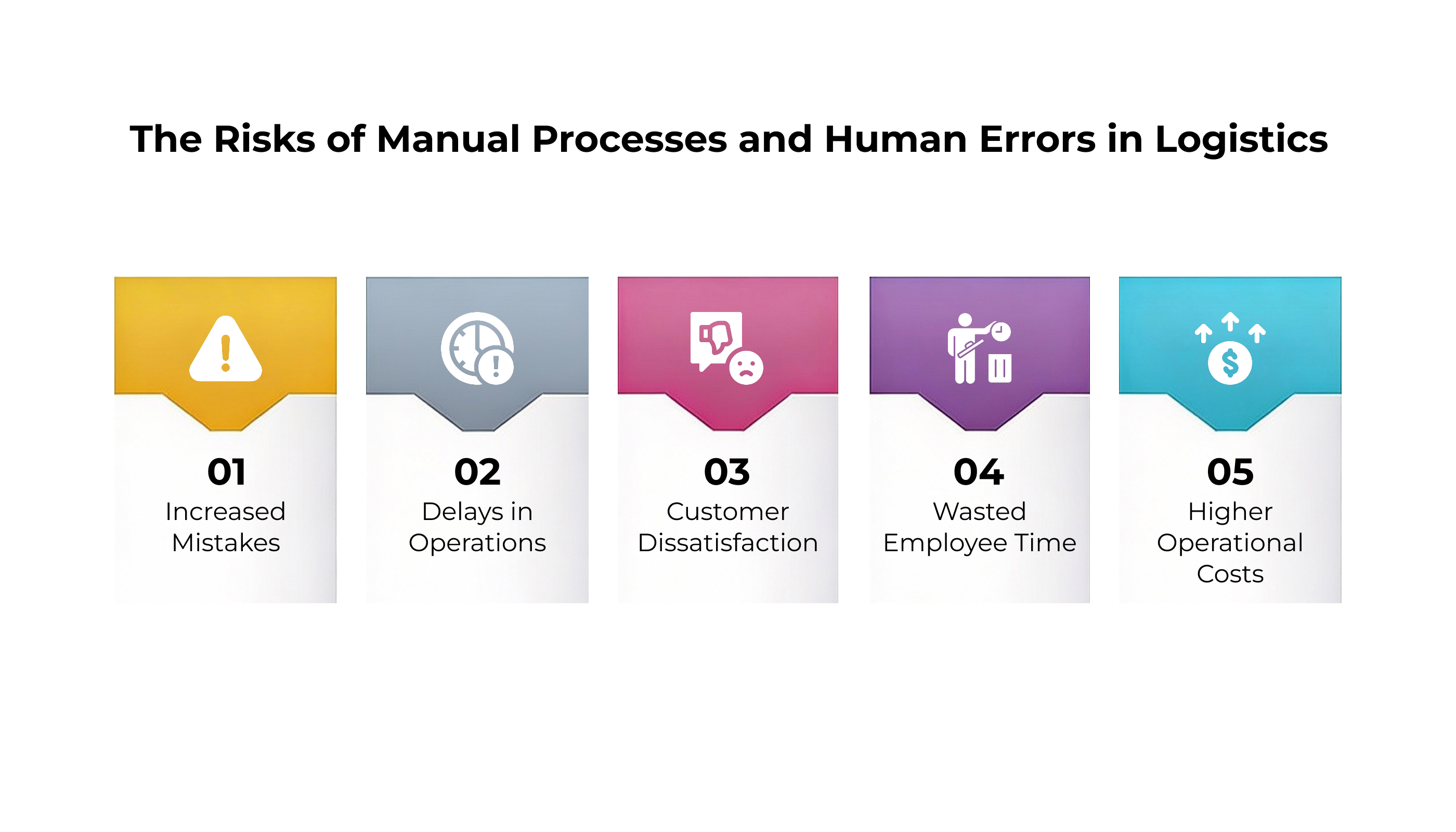
Increased Mistakes: Manual data entry can lead to errors like mistyped order numbers or wrong shipment details.
Delays in Operations: Errors cause shipment delays and misplaced goods, disrupting the supply chain.
Customer Dissatisfaction: Mistakes affect delivery accuracy, leading to unhappy customers and lost trust.
Wasted Employee Time: Staff spend excessive time fixing errors instead of focusing on productive tasks.
Higher Operational Costs: Correcting errors and managing their consequences increases overall logistics costs.
Why Poor Communication Across Departments Hurts Logistics Performance
Logistics is a team effort. When communication breaks down between departments — such as sales, warehouse, transportation, and finance critical information falls through the cracks. Orders get delayed, shipments get lost, and invoicing errors occur.
This lack of coordination slows down the entire supply chain and harms customer service.
How ERP Software Addresses Core Logistics Management Challenges
ERP system for logistics is a powerful tool that integrates all aspects of logistics management into a single platform. Here’s how ERP software solves the key challenges:
| Challenge | How ERP Software Solves It |
| Inefficient Inventory Management | Provides real-time inventory tracking, automatic stock alerts, and demand forecasting to maintain optimal inventory. |
| Lack of Real-Time Visibility | Offers live dashboards and tracking of shipments, vehicles, and stock for instant visibility across the supply chain. |
| Transportation and Fleet Management | Automates route planning, monitors vehicle health, and tracks driver performance to reduce costs and improve delivery. |
| Manual Processes and Human Errors | Replaces manual data entry with automated workflows, reducing errors and freeing staff to focus on strategic work. |
| Poor Communication Across Departments | Centralizes data and facilitates real-time collaboration, ensuring everyone stays on the same page. |
How PerfectionGeeks Helps Logistics Companies Overcome Challenges
PerfectionGeeks Technologies delivers custom ERP solutions tailored for logistics businesses, solving complex operational challenges with real-time visibility and automation.
Key Benefits:
- Customized ERP: Designed to fit your specific logistics needs like fleet management and inventory tracking.
- Real-Time Data: Live dashboards and mobile apps keep you updated on shipments and stock, reducing errors.
- Proven Results: Helping companies cut costs, speed up deliveries, and improve customer satisfaction.
Case Study: Real Business Benefits from Implementing Logistics ERP Software
Company: Swift Logistics, a mid-sized distribution company facing significant delays and high operational costs.
Challenge
Swift Logistics struggled with inaccurate inventory counts, poor communication between departments, and costly fleet inefficiencies. Delays frustrated customers and profitability was shrinking.
Solution
Swift Logistics implemented a comprehensive logistics ERP software developed and customized by PerfectionGeeks Technologies. The solution integrated inventory, transportation, and finance data into one system.
Results
- Inventory Accuracy Improved: Automated tracking reduced stock discrepancies by 40%.
- Better Fleet Management: Route optimization cut fuel costs by 15%.
- Enhanced Communication: Real-time dashboards allowed departments to coordinate shipments smoothly, reducing delays by 25%.
- Increased Customer Satisfaction: On-time delivery rates increased, leading to more repeat business.
Swift Logistics turned its logistics headaches into a competitive advantage with ERP software tailored for logistics companies, powered by PerfectionGeeks.
Frequently Asked Questions
Quick answers related to this article from PerfectionGeeks.
1. What is the difference between logistics management software and ERP software for logistics?
2. Will ERP software help reduce operational costs?
3. Can small logistics companies benefit from ERP systems?
4. Can PerfectionGeeks customize ERP software to fit my specific logistics operations?
Conclusion
Logistics management comes with many challenges that can impact efficiency and customer satisfaction. However, these obstacles can be overcome with advanced, customized ERP solutions designed specifically for logistics companies. PerfectionGeeks Technologies combines deep industry expertise with cutting-edge technology to deliver real-time visibility, reduce errors, and optimize fleet and warehouse operations. Their tailored ERP systems help logistics businesses improve communication, control costs, and scale smoothly.
By partnering with PerfectionGeeks, logistics companies can transform complex operations into streamlined workflows, gaining a competitive edge and building more reliable supply chains. If you want to enhance your logistics performance and future-proof your business, PerfectionGeeks is the trusted partner to help you get there.

Written By Shrey Bhardwaj
Director & Founder
Shrey Bhardwaj is the Director & Founder of PerfectionGeeks Technologies, bringing extensive experience in software development and digital innovation. His expertise spans mobile app development, custom software solutions, UI/UX design, and emerging technologies such as Artificial Intelligence and Blockchain. Known for delivering scalable, secure, and high-performance digital products, Shrey helps startups and enterprises achieve sustainable growth. His strategic leadership and client-centric approach empower businesses to streamline operations, enhance user experience, and maximize long-term ROI through technology-driven solutions.