
Published 18 July 2025 | Updated 23 May 2026
Technology
How Virtual Try-On Technology is Revolutionizing E-Commerce
The landscape of online shopping is evolving rapidly. While convenience, variety, and competitive pricing have always been its strongest points, e-commerce still faces one significant challenge—shoppers cannot physically interact with products before buying. This gap is being bridged by one of the most impactful innovations in recent years: virtual try-on technology. Virtual try on is transforming the way people shop online. From fashion and eyewear to cosmetics and even home decor, this advanced technology enables customers to preview products on themselves or in their space using augmented reality (AR) and artificial intelligence (AI).
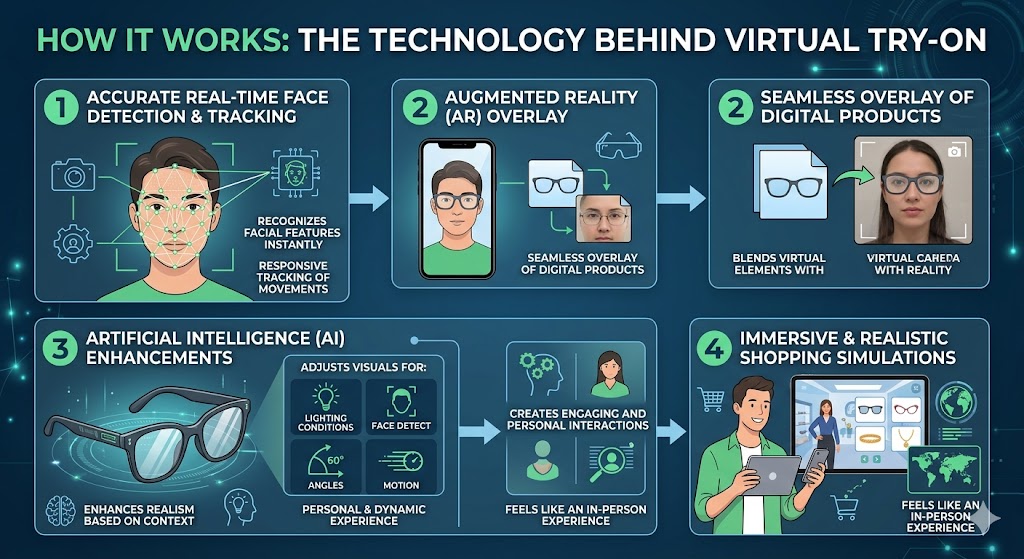
What Is Virtual Try-On Technology?Virtual try-on technology is an advanced ecommerce solution that uses augmented reality (AR), artificial intelligence (AI), computer vision, and 3D modeling to allow customers to digitally try products before purchasing online. This technology is widely used in industries such as fashion, beauty, eyewear, jewelry, and footwear to improve online shopping experiences and increase customer confidence. How Virtual Try-On Technology WorksVirtual try-on systems use smartphone cameras, facial recognition, body tracking, and AR overlays to display products on users in real time. Key Benefits of Virtual Try-On Technology
As ecommerce competition increases, virtual try-on technology is becoming a major innovation for digital retail businesses. |
- Virtual try-on technology uses augmented reality, artificial intelligence, and computer vision to create interactive ecommerce shopping experiences.
- Ecommerce brands are increasingly adopting virtual try-on solutions to improve customer engagement, personalization, and online purchase confidence.
- AR-powered shopping experiences help reduce product return rates by allowing customers to visualize products before buying.
- Industries such as fashion, beauty, eyewear, jewelry, and furniture are major adopters of virtual try-on technology.
- AI and computer vision technologies improve facial recognition, body tracking, and personalized product recommendations within virtual try-on systems.
- Mobile commerce growth is accelerating the demand for immersive and interactive digital retail experiences.
- Virtual try-on platforms help businesses increase ecommerce conversion rates and improve overall customer satisfaction.
- Combining AI, AR, and 3D visualization technologies creates more realistic and personalized shopping environments.
- Ecommerce companies investing in virtual try-on technology gain a competitive advantage through enhanced digital customer experiences.
- PerfectionGeeks provides AR, AI, ecommerce, and virtual try-on application development solutions tailored for modern retail businesses and digital transformation goals.
Virtual Try-On for Clothing: A New Standard
The fashion industry is leading the way in adopting virtual try on for clothing. These tools allow users to view garments on 3D avatars that mimic their body type or even use their own photos to see the actual fit. This reduces size-related uncertainty and improves confidence in online fashion purchases.
Online apparel brands and marketplaces are increasingly integrating online try on tools to stay competitive. These tools don’t just show the design but simulate the fabric movement and drape, giving customers a more realistic preview.
Expanding Beyond Fashion
While virtual try on for clothing is gaining widespread use, this technology is also expanding into other sectors. Cosmetics companies offer AR mirrors for trying makeup shades; eyewear brands let users test different frame styles; furniture retailers allow customers to project couches or tables into their rooms. As more industries embrace ecommerce virtual try on, this tech becomes a standard feature across online retail.
How It Works: The Technology Behind It
The success of virtual try-on relies on the accuracy and responsiveness of its underlying technology. AR helps overlay digital images in real-world environments. AI enhances these experiences by adjusting visuals based on face detection, lighting, angles, and even motion. Together, they create immersive and realistic shopping simulations that feel personal and dynamic.
The Future of Online Shopping
As online shoppers grow more tech-savvy, their expectations are also rising. They want accuracy, personalization, and interactivity—all in real time. Virtual try-on technology delivers on these fronts, making it a cornerstone of the future of e-commerce. Retailers who implement try on virtually online shopping experiences are not only improving customer satisfaction but are also future-proofing their business against rising competition. The ability to interact with products virtually is no longer just a novelty—it’s becoming an essential part of the buying process.
Virtual Try-On Technology Industry Statistics
The global ecommerce and augmented reality market is rapidly expanding as businesses invest in immersive shopping experiences and AI-powered retail solutions.
Key Industry Insights
- Ecommerce brands are increasingly adopting AR and AI technologies to improve customer experiences.
- Virtual try-on solutions help reduce product return rates by improving purchase accuracy.
- Mobile commerce growth is driving demand for interactive and personalized shopping experiences.
- Fashion, beauty, eyewear, and jewelry brands are among the largest adopters of virtual try-on technology.
- AI-powered personalization is becoming a major competitive advantage in online retail.
Why Virtual Try-On Technology Is Growing
Virtual try-on platforms help businesses:
- Improve customer confidence
- Increase product engagement
- Boost online sales conversions
- Reduce return-related operational costs
- Deliver immersive shopping experiences
- Enhance mobile commerce performance
As digital shopping behavior continues evolving, AR-powered ecommerce solutions are becoming essential for modern retail brands.
Build AR-Powered Ecommerce Solutions with PerfectionGeeksLooking to integrate virtual try-on technology into your ecommerce platform? PerfectionGeeks specializes in AR, AI, and ecommerce application development tailored for modern retail experiences. Our team helps brands build immersive shopping platforms with advanced virtual try-on capabilities, real-time product visualization, and AI-powered personalization. Our Virtual Try-On Development Services
Why Choose PerfectionGeeks?
Ready to Transform Your Ecommerce Experience?Contact PerfectionGeeks today for a free consultation. |
Applications of Virtual Try-On Technology in Ecommerce
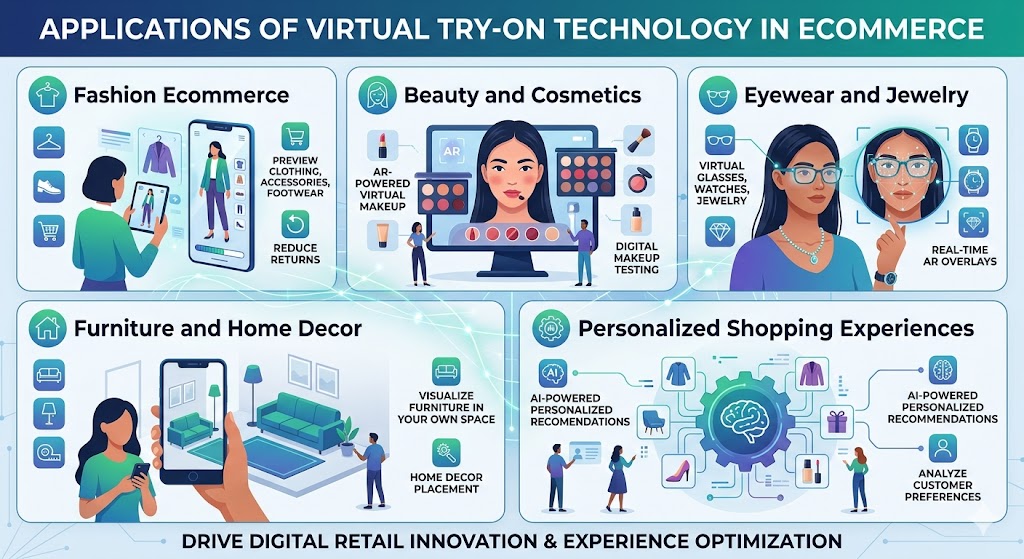
Virtual try-on technology is transforming multiple retail sectors by improving personalization, customer interaction, and digital shopping experiences.
Fashion Ecommerce
Fashion retailers use virtual try-on tools to allow customers to preview clothing, accessories, and footwear before purchasing online.
Beauty and Cosmetics
Beauty brands use AR-powered virtual makeup try-on systems to help users test products such as lipstick, foundation, and skincare items digitally.
Eyewear and Jewelry
Customers can virtually try glasses, watches, and jewelry using facial recognition and real-time AR overlays.
Furniture and Home Decor
AR technology helps users visualize furniture and home decor products within their own spaces before making purchasing decisions.
Personalized Shopping Experiences
AI-powered virtual try-on systems analyze customer preferences and behavior to provide personalized product recommendations.
As ecommerce businesses continue focusing on customer experience optimization, virtual try-on technology is becoming a major driver of digital retail innovation.
Role of AI and Augmented Reality in Virtual Try-On Technology
Artificial intelligence and augmented reality are the core technologies behind modern virtual try-on platforms.
Artificial Intelligence in Virtual Try-On
AI helps ecommerce platforms:
- Analyze facial and body features
- Improve product recommendations
- Personalize shopping experiences
- Enhance image recognition accuracy
- Optimize customer engagement
Augmented Reality in Ecommerce
AR technology enables real-time digital overlays that allow users to visualize products interactively using smartphones and wearable devices.
Computer Vision Integration
Computer vision systems improve product alignment, body tracking, and facial recognition capabilities within virtual try-on applications.
The combination of AI, AR, and computer vision is transforming the future of ecommerce and digital retail experiences.
Virtual try-on technology is rapidly redefining how customers interact with products in digital retail environments. |
Frequently Asked Questions
Quick answers related to this article from PerfectionGeeks.
1. What is virtual try-on technology?
2. Which industries use virtual try-on technology?
3. How does AR improve ecommerce experiences?
4. Why is virtual try-on important for ecommerce businesses?
5. What technologies are used in virtual try-on applications?
6. How can PerfectionGeeks help develop virtual try-on solutions?
Conclusion
In a world where digital convenience must meet physical realism, virtual try on is the perfect solution. It enhances customer confidence, reduces returns, and elevates the overall shopping experience. As more industries embrace virtual try-on technology, it is set to become a staple in e-commerce platforms worldwide. PerfectionGeeks Technologies offers end-to-end development of immersive ecommerce virtual try on solutions. From fashion to cosmetics and beyond, we help brands integrate cutting-edge online try on tools tailored to their industry and user base. Partner with us to bring the future of interactive shopping to your customers today.

Written By Shrey Bhardwaj
Director & Founder
Shrey Bhardwaj is the Director & Founder of PerfectionGeeks Technologies, bringing extensive experience in software development and digital innovation. His expertise spans mobile app development, custom software solutions, UI/UX design, and emerging technologies such as Artificial Intelligence and Blockchain. Known for delivering scalable, secure, and high-performance digital products, Shrey helps startups and enterprises achieve sustainable growth. His strategic leadership and client-centric approach empower businesses to streamline operations, enhance user experience, and maximize long-term ROI through technology-driven solutions.


