
Published 11 March 2026 | Updated 8 July 2026
Technology
How Much Does Accounting Practice Management Software Development Cost in Australia 2026?
Accounting firms in Australia are rapidly shifting toward digital solutions to streamline operations and improve productivity. Manual processes like spreadsheets and paperwork are being replaced by advanced systems that manage clients, tasks, billing, and financial data in one platform. This transformation has significantly increased the demand for accounting practice management software in Australia. However, many firms planning to build a custom solution often ask one key question: How much does accounting practice management software development cost in Australia in 2026? The answer depends on factors such as features, complexity, integrations, and development time.
Introduction to Accounting Practice Management Software
Accounting practice management software is designed to help accounting firms manage their operations more efficiently. It combines multiple tools into one platform, allowing accountants to manage clients, track tasks, organize documents, and automate billing. Accounting firms often deal with large amounts of financial data and strict deadlines. Using practice management software accounting firm systems helps teams stay organized and reduces manual work.
For example, accountants can track tax deadlines, assign tasks to team members, manage client communications, and store important financial documents securely. Many modern platforms also include document management software for accounting firms, which ensures safe storage and easy sharing of confidential documents. With the help of accounting software for accounting firms, businesses can improve workflow management, reduce operational errors, and increase overall productivity.
Market Overview of Accounting Software Development in Australia
Australia’s accounting industry continues to grow rapidly as firms adopt digital solutions to improve efficiency and manage increasing financial regulations. With thousands of accounting firms and millions of businesses relying on professional accounting services, the demand for modern accounting platforms is rising. Cloud-based tools, automation, and AI-powered analytics are transforming how firms manage client data, compliance, and financial reporting.
Key Statistics
- Australia’s accounting industry generates $30+ billion in annual revenue.
- The country has 35,000+ accounting firms serving businesses across various industries.
- Australia has 2.5+ million SMEs that rely on accountants for financial and tax management.
- Over 70% of Australian businesses use cloud-based accounting software.
- Demand for accounting practice management software is increasing as firms automate workflows and improve productivity.
Key Features of Accounting Practice Management Software
The best accounting practice management software includes several important features that help firms manage their work efficiently.
Client Management: This feature allows firms to store client details, financial information, and communication history in a centralized system.
Workflow and Task Management: Accountants can assign tasks, track deadlines, and monitor progress for various projects such as tax filings, audits, and financial reports.
Document Management: A secure document management software for accounting firms allows teams to upload, organize, and share important documents safely.
Time Tracking and Billing: Accountants can track billable hours and generate invoices automatically, reducing manual effort.
Reporting and Analytics: Advanced analytics tools help managers evaluate business performance, client profitability, and team productivity.
Integration with Other Tools: Modern software for accounting firms integrates with payroll systems, tax platforms, CRM tools, and payment gateways.
These features make accounting practice management platforms essential tools for accounting firms aiming to improve productivity and efficiency.
Types of Accounting Practice Management Software
There are several types of accounting practice management software Australia available depending on business requirements.
Cloud-Based Software
Cloud-based systems are the most widely used today. They allow accountants to access data from anywhere and provide automatic updates and backups.
On-Premise Software
On-premise solutions are installed on company servers. These systems offer greater control over data but require regular maintenance.
Custom Accounting Practice Management Software
Many firms prefer customized platforms developed through accounting software development services. These solutions are designed specifically for the firm's workflow and business model.
Custom systems often become the best accounting practice management software for firms that require advanced features and integrations.
How Much Does Accounting Practice Management Software Development Cost in Australia in 2026?
The cost of developing accounting practice management software Australia depends on system complexity, features, and integrations.
Below is an estimated development cost range.
| Software Type | Estimated Development Cost | Development Time |
| Basic Accounting Practice Software | $25,000 – $50,000 | 3 – 4 months |
| Mid-Level Accounting Management System | $50,000 – $120,000 | 5 – 8 months |
| Advanced Enterprise Accounting Platform | $120,000 – $300,000+ | 8 – 12 months |
A basic system may include features such as client management, workflow tracking, and billing tools. A mid-level system includes integrations, reporting dashboards, and document management.
Enterprise-level platforms built by an accounting ERP software development company may include automation, advanced analytics, compliance tracking, and multi-user collaboration tools.
Key Factors That Affect Accounting Software Development Cost
Several factors influence the final cost of accounting software development.
Software Complexity: More complex systems require more development time and resources.
Features and Modules: Advanced modules such as AI analytics, reporting dashboards, and automation increase development costs.
UI and UX Design: User-friendly interfaces require professional design work.
Third-Party Integrations: Integrating banking systems, tax software, and payment gateways adds development complexity.
Security and Compliance: Accounting platforms must include strong security features to protect financial data.
Development Team: The expertise and location of the accounting software development agency also affect the overall cost.
Technology Stack Used for Accounting Practice Management Software Development
| Technology Layer | Tools & Technologies | Purpose |
| Frontend | React.js, Angular, Vue.js | Build responsive and user-friendly interfaces for accountants and clients |
| Backend | Node.js, Python, Java, .NET Core | Handle business logic, workflows, and server-side processing |
| Database | PostgreSQL, MySQL, MongoDB | Store financial data, client records, and transactions securely |
| Cloud Infrastructure | AWS, Microsoft Azure, Google Cloud | Ensure scalability, security, and high availability of the software |
| Integrations | REST APIs, Tally API, Payment Gateway APIs | Connect with accounting tools, payment systems, and third-party platforms |
| Security | OAuth, SSL Encryption, Multi-Factor Authentication | Protect sensitive financial and client data |
| DevOps | Docker, Kubernetes, CI/CD Pipelines | Enable faster deployment, updates, and system maintenance |
Development Process of Accounting Practice Management Software
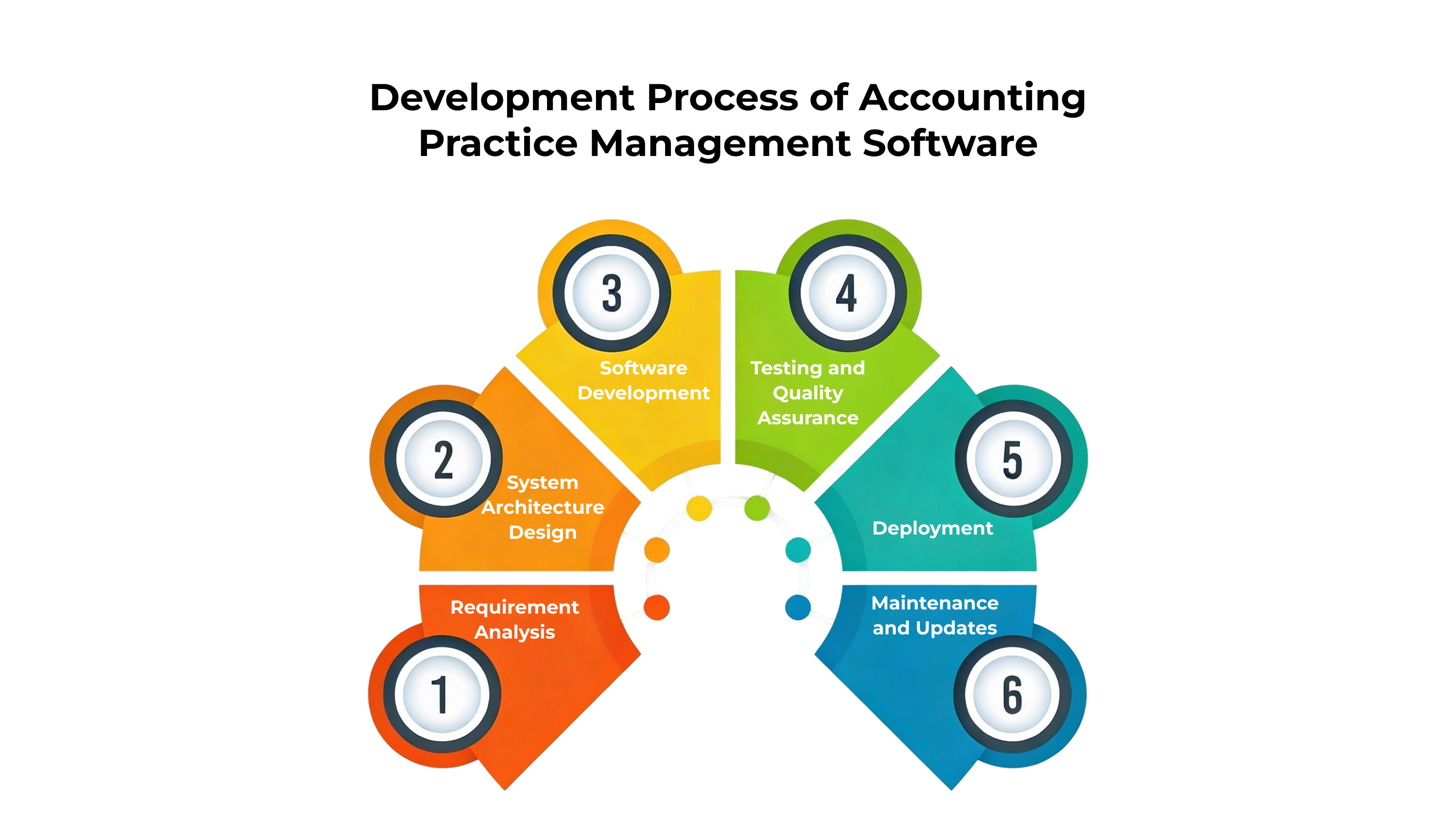
The development of accounting practice management software typically follows several stages.
Requirement Analysis
The first step involves understanding the business goals and operational needs of the accounting firm. Developers gather detailed requirements about features such as client management, billing, reporting, and workflow automation. This stage helps define the project scope and ensures the software aligns with the firm’s processes. Proper requirement analysis also reduces the risk of development errors later.
System Architecture Design
In this stage, developers plan the overall system structure and technical framework. This includes designing the database, defining system workflows, and selecting the appropriate technology stack. A well-designed architecture ensures the software is scalable, secure, and capable of handling large volumes of financial data.
Software Development
During development, programmers build the core modules of the system based on the approved design. Key components such as client management, billing systems, document management, and task tracking are developed and integrated. Developers also implement automation features to simplify accounting workflows and improve efficiency.
Testing and Quality Assurance
Before launching the software, it undergoes thorough testing to ensure reliability and performance. QA teams check for bugs, security vulnerabilities, and system errors. Functional testing, performance testing, and security checks help ensure the platform works smoothly and protects sensitive financial data.
Deployment
Once testing is complete, the software is deployed on cloud platforms or the company’s internal servers. The deployment process includes system configuration, data migration, and integration with existing tools. This stage ensures the software is ready for real-world use by accounting teams.
Maintenance and Updates
After deployment, continuous maintenance is required to keep the system secure and efficient. Developers release updates to fix bugs, improve performance, and add new features when needed. Regular maintenance ensures the software adapts to changing regulations and evolving business requirements.
Why Choose a Custom Accounting Practice Management Software Solution
Custom solutions offer several advantages compared to generic software.
- First, they are designed specifically for the firm’s workflow. This ensures better efficiency and eliminates unnecessary features.
- Second, custom platforms can easily integrate with existing systems such as payroll tools, tax software, and CRM platforms.
- Third, they provide greater scalability. As accounting firms grow, new features and modules can be added without replacing the entire system.
Because of these benefits, many firms prefer custom accounting practice management solutions developed through professional accounting software development services.
Challenges in Developing Accounting Practice Management Software
Developing software for accounting firms can present several challenges.
Data Security
Accounting systems store sensitive financial and client information. Strong security measures such as encryption, access control, and secure authentication are necessary to protect data.
Compliance Requirements
The software must follow financial regulations, tax laws, and accounting standards. Ensuring compliance helps businesses avoid legal risks and maintain accurate financial reporting.
Complex Integrations
Accounting platforms often need to integrate with banking systems, payment gateways, tax tools, and other financial software. Managing these integrations can be technically complex.
User Adoption
Employees may find it difficult to switch from traditional methods to new digital systems. Proper training and a user-friendly interface help teams adapt to the software more easily.
System Scalability
As accounting firms grow, the software must support more clients, users, and transactions. A scalable system ensures long-term performance and business growth.
Addressing these challenges requires experienced developers and proper system planning.
Why Partnering with PerfectionGeeks in Australia is the Right Choice
Choosing the right development partner is important when building accounting practice management software Australia.
An experienced accounting software development agency understands the specific needs of accounting firms and can design systems that automate workflows and improve productivity. Professional teams ensure secure architecture, smooth integrations, and scalable solutions that grow with the business. Working with experts in accounting software development services also ensures ongoing support, system upgrades, and continuous performance improvements.
Frequently Asked Questions
Quick answers related to this article from PerfectionGeeks.
1. What is accounting practice management software and why is it important for accounting firms?
2. How much does accounting practice management software development cost in Australia?
3. How long does it take to develop accounting practice management software?
4. Does PerfectionGeeks provide customized accounting software for accounting firms?
Conclusion
The demand for accounting practice management software is growing as accounting firms in Australia move toward digital transformation. With thousands of accounting firms and millions of businesses requiring financial services, the need for efficient accounting software for accounting firms continues to increase. Developing custom software allows firms to automate workflows, improve collaboration, and manage financial data more effectively. Although the cost of accounting software development depends on system complexity and features, investing in the right platform can significantly improve productivity and operational efficiency. Partnering with a trusted technology provider is essential for building reliable solutions. PerfectionGeeks specializes in delivering advanced accounting software development services and building customized platforms tailored to the needs of modern accounting firms. By using the right technology and development strategy, businesses can create powerful systems that support growth and long-term success.

Written By Shrey Bhardwaj
Director & Founder
Shrey Bhardwaj is the Director & Founder of PerfectionGeeks Technologies, bringing extensive experience in software development and digital innovation. His expertise spans mobile app development, custom software solutions, UI/UX design, and emerging technologies such as Artificial Intelligence and Blockchain. Known for delivering scalable, secure, and high-performance digital products, Shrey helps startups and enterprises achieve sustainable growth. His strategic leadership and client-centric approach empower businesses to streamline operations, enhance user experience, and maximize long-term ROI through technology-driven solutions.