
Published 11 March 2026 | Updated 7 August 2026
Technology
How Custom Accounting Practice Management Software Improves Firm Productivity
Accounting firms manage many tasks every day, including client records, financial reports, tax filings, and billing. When these processes rely on manual work or multiple disconnected tools, productivity can slow down and errors may increase. To solve this, many firms are adopting accounting practice management software to streamline operations. Even more firms are now investing in custom accounting software built for their specific workflows. These solutions help automate tasks, improve collaboration, and boost overall efficiency across accounting teams.
Understanding Accounting Practice Management Software
Accounting practice management software is a digital platform designed to help accounting firms manage their daily operations in a single system. It combines multiple functions such as task management, client communication, document storage, billing, and reporting. A typical accounting practice management system helps firms track deadlines, assign tasks to team members, and monitor project progress. This allows managers to ensure that tax filings, audits, and financial reports are completed on time.
Many accounting firms use these platforms as accounting productivity software because they reduce manual work and improve team coordination. Instead of using multiple applications, accountants can manage everything from one dashboard.
Why Traditional Accounting Processes Reduce Productivity
Many accounting firms still rely on spreadsheets, emails, and manual processes to manage their operations. While these methods may work for small teams, they become inefficient as firms grow.
Manual processes create several challenges:
• Time wasted on repetitive tasks
• Difficulty tracking deadlines and projects
• Lack of centralized client information
• Increased chances of billing errors
• Limited visibility into team performance
Without the right tools, accountants spend more time on administrative tasks rather than providing valuable financial advice to clients. This is where accounting automation software becomes essential.
What Is Custom Accounting Software?
Custom accounting software is built specifically for the needs of a particular accounting firm. Unlike generic tools, custom systems are designed around the firm's workflow, services, and team structure.
For example, a firm that specializes in tax consulting may require advanced tax automation tools, while another firm focusing on financial advisory may need better reporting dashboards.By developing custom accounting software for firms, businesses can ensure that their software supports their exact operational requirements. Custom solutions also integrate easily with other tools such as payroll systems, CRM platforms, and payment gateways.
Key Ways Custom Accounting Practice Management Software Improves Productivity
Centralized Client Management
One of the biggest advantages of accounting firm management software is centralized client management. All client information, financial records, and communication history are stored in one place. This makes it easier for accountants to access information quickly and reduces time spent searching through emails or documents.
Workflow Automation
Modern accounting workflow automation software helps firms automate repetitive tasks such as sending reminders, generating invoices, and assigning tasks. Automation reduces manual work and ensures that tasks are completed on schedule.
For example, a system can automatically remind accountants about tax deadlines or send clients notifications when documents are required.
Improved Collaboration Among Teams
Accounting firms often have multiple team members working on different client accounts. Without proper coordination tools, communication gaps can occur. A well-designed accounting practice management system allows teams to collaborate effectively by sharing files, assigning tasks, and tracking progress.
This improves accountability and reduces delays in project completion.
Faster Document Management
Managing financial documents is a major part of accounting work. Custom systems often include secure document management features that allow teams to store and organize files efficiently. These accounting automation tools for firms help accountants upload, share, and retrieve documents quickly.
As a result, firms spend less time handling paperwork and more time focusing on client services.
Automated Billing and Invoicing
Billing errors can cause delays in payments and impact cash flow. With accounting automation software, invoices can be generated automatically based on billable hours or completed tasks.This not only saves time but also reduces errors in financial transactions.
Automated billing ensures that firms receive payments faster and maintain accurate financial records.
Data Insights and Performance Tracking
Custom accounting productivity software often includes analytics tools that help firms track performance. Managers can view reports showing team productivity, project timelines, and client profitability.
These insights help firms make better business decisions and allocate resources more efficiently.
Manual Accounting Processes vs Automated Systems
The difference between manual processes and modern accounting firm software solutions can be significant.
| Feature | Manual Processes | Custom Accounting Software |
| Client Management | Data stored in spreadsheets and emails | Centralized client database |
| Workflow Management | Manual tracking of tasks | Automated task management |
| Document Storage | Paper files or scattered digital folders | Secure digital document management |
| Billing | Manual invoicing | Automated billing and payment tracking |
| Reporting | Time-consuming manual reports | Real-time analytics and insights |
As shown in the table, automated systems significantly improve efficiency and reduce administrative workload.
Benefits of Custom Accounting Software for Firms
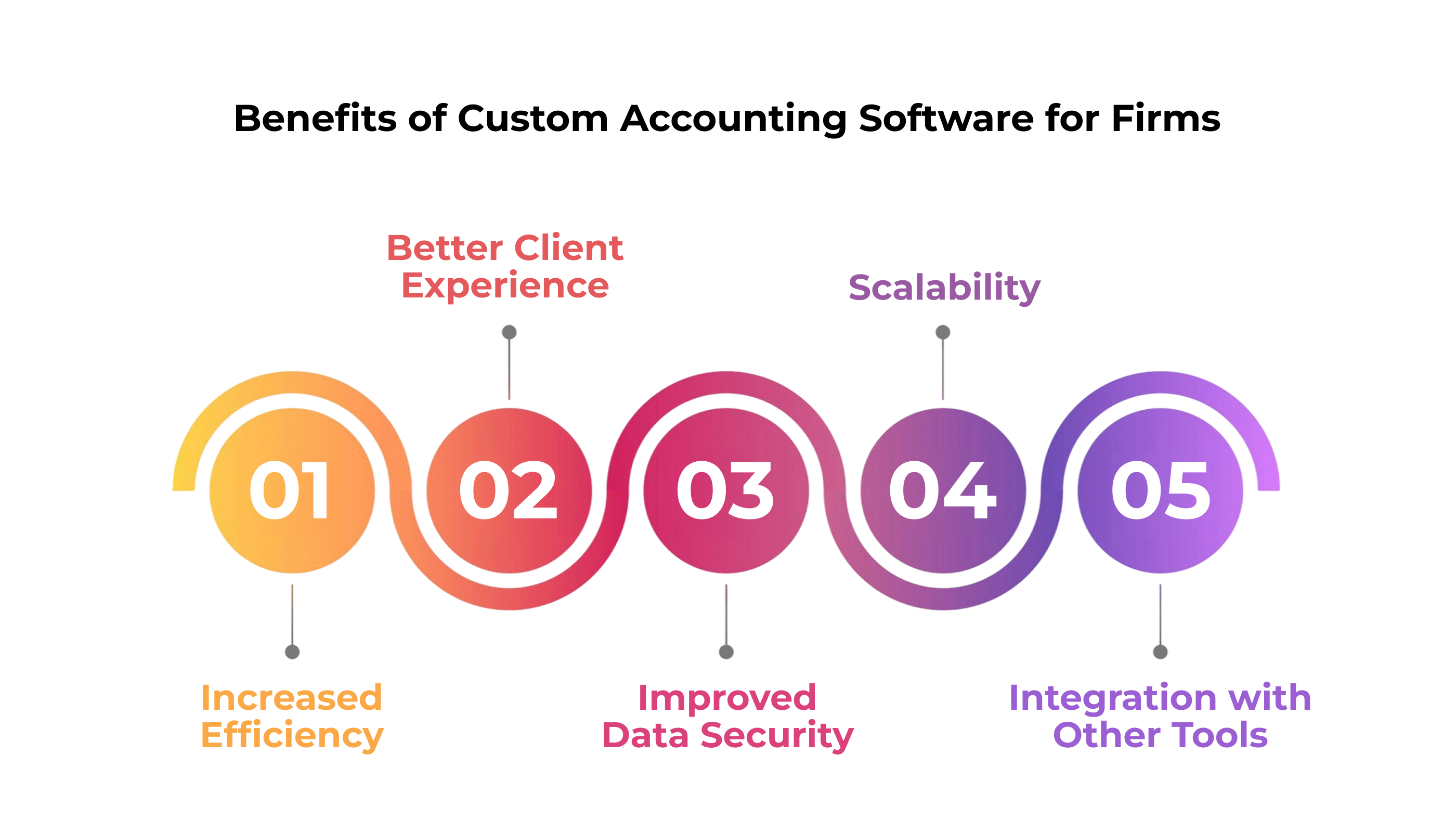
Increased Efficiency: By automating repetitive tasks, accountants can focus on higher-value activities such as financial analysis and client advisory.
Better Client Experience: With improved workflow management and communication tools, firms can deliver faster and more reliable services.
Improved Data Security: Financial data is highly sensitive. Custom systems can include advanced security features such as encryption and role-based access control.
Scalability: As firms grow, custom software can easily add new modules and features without replacing the entire system.
Integration with Other Tools: Custom accounting firm software solutions can integrate with payroll software, banking systems, CRM platforms, and other financial tools.
Features Every Accounting Practice Management System Should Include
A powerful accounting practice management system should include several essential features.
1. Client Relationship Management (CRM)
This feature helps accounting firms organize client information, track communications, and maintain relationships efficiently. It ensures that all client interactions are recorded, making follow-ups and personalized service easier.
2. Task and Workflow Management
With this feature, teams can assign tasks, set deadlines, and monitor progress. It helps ensure that every assignment is completed on time and that workflows are streamlined.
3. Document Management System (DMS)
A secure DMS stores all financial records, contracts, and client documents in one place. It simplifies retrieval, reduces paper clutter, and ensures compliance with data protection regulations.
4. Billing and Invoicing Automation
This automates invoice creation and payment tracking, reducing manual work. It ensures timely billing and improves cash flow management for the firm.
5. Time Tracking
Time tracking logs billable hours automatically, making billing accurate and fair. It also helps firms analyze productivity and manage staff workload effectively.
6. Analytics and Reporting
This feature provides insights into firm performance through reports and dashboards. It helps identify trends, measure productivity, and make data-driven business decisions.
Challenges Without Accounting Automation Software
Firms that do not adopt accounting automation software may face several operational challenges.
Inefficient Workflows: Manual processes slow down operations and increase administrative workload.
Increased Risk of Errors: Manual data entry often leads to mistakes in financial reports and invoices.
Limited Visibility: Without proper reporting tools, managers cannot easily track team productivity.
Poor Client Communication: Delays in responding to client requests can affect customer satisfaction.
Adopting accounting workflow automation software helps firms overcome these issues.
Future of Accounting Firm Software Solutions
The accounting industry is evolving rapidly due to digital transformation. New technologies such as artificial intelligence, machine learning, and cloud computing are shaping the future of accounting firm software solutions.
AI-Powered Accounting Automation
Artificial intelligence is becoming an important part of accounting software. AI accounting software can automatically categorize transactions, detect errors, and generate financial insights. This helps accountants save time and focus on strategic financial planning.
Cloud-Based Accounting Platforms
Cloud technology allows accounting firms to access data from anywhere at any time. Cloud-based systems improve collaboration between teams and clients while ensuring secure data storage and real-time updates.
Advanced Data Analytics and Reporting
Future accounting software will include powerful analytics tools that provide deeper financial insights. These systems will help firms analyze business performance, predict financial trends, and support better decision-making.
Integration with Business Ecosystems
Modern accounting firm software solutions will integrate easily with CRM systems, payment platforms, payroll tools, and tax applications. This will create a connected digital ecosystem where all financial data flows automatically between systems.
Improved Security and Compliance Tools
As financial data becomes more digital, security will remain a top priority. Future systems will include stronger encryption, automated compliance checks, and advanced monitoring tools to protect sensitive financial information.
Frequently Asked Questions
Quick answers related to this article from PerfectionGeeks.
1. What is an accounting practice management system?
2. Why is workflow automation important for accounting firms?
3. How does time tracking help an accounting firm?
4. What reporting and analytics features are included?
Conclusion
The accounting industry is becoming more competitive and technology-driven. Firms that continue to rely on manual processes may struggle to keep up with growing client demands and complex financial regulations. Investing in accounting practice management software can significantly improve productivity by automating workflows, organizing client data, and improving collaboration among teams. Custom solutions provide even greater benefits by allowing firms to build systems tailored to their specific needs. With the help of custom accounting software for firms, accountants can streamline operations, reduce errors, and focus on delivering better financial services.
As digital transformation continues to reshape the accounting industry, adopting accounting automation tools for firms will be essential for businesses that want to remain competitive and efficient in the years ahead.

Written By Shrey Bhardwaj
Director & Founder
Shrey Bhardwaj is the Director & Founder of PerfectionGeeks Technologies, bringing extensive experience in software development and digital innovation. His expertise spans mobile app development, custom software solutions, UI/UX design, and emerging technologies such as Artificial Intelligence and Blockchain. Known for delivering scalable, secure, and high-performance digital products, Shrey helps startups and enterprises achieve sustainable growth. His strategic leadership and client-centric approach empower businesses to streamline operations, enhance user experience, and maximize long-term ROI through technology-driven solutions.